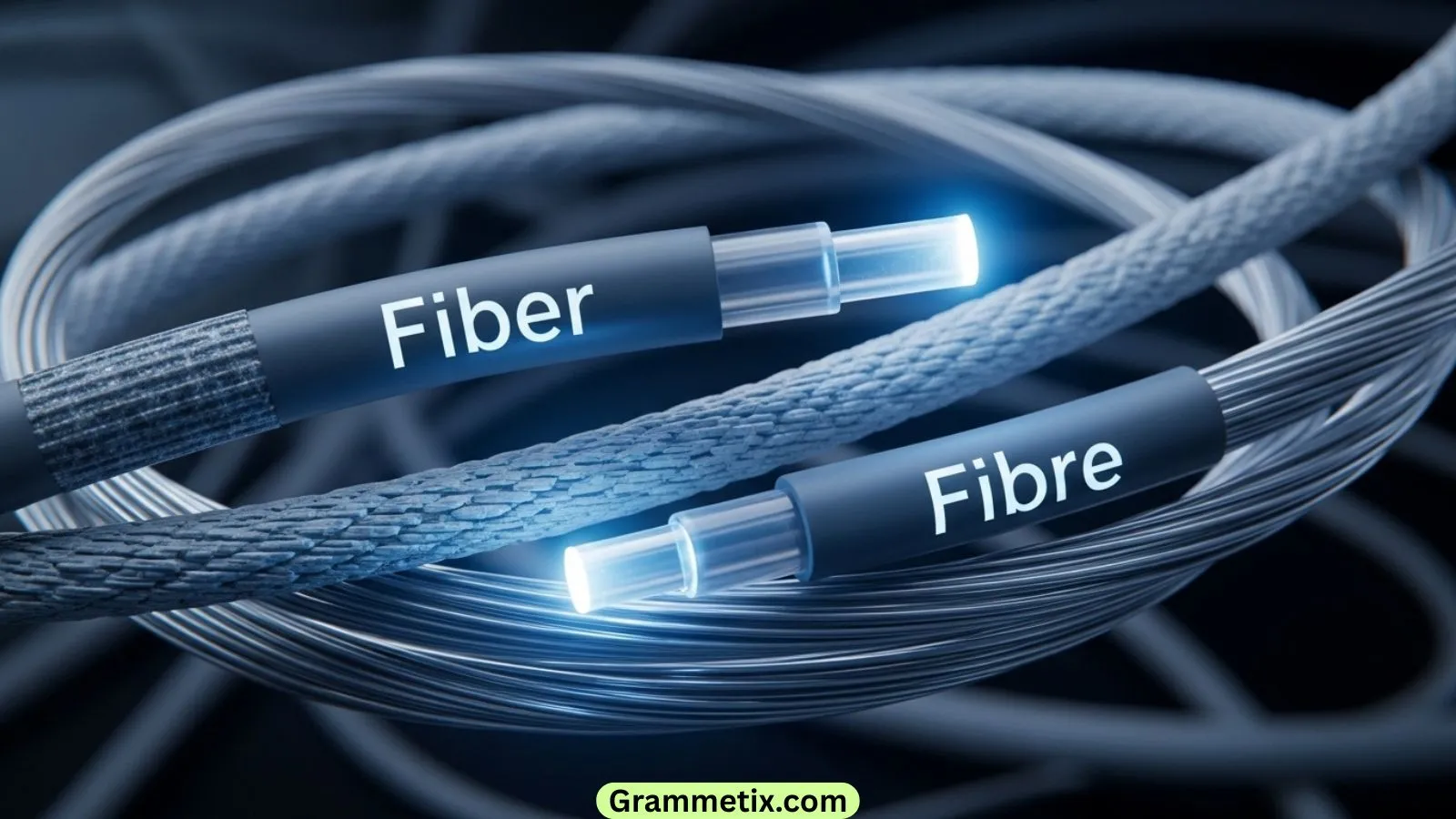
If you’ve ever searched for fiber or fibre, you’re not alone. Many people get confused because both spellings look correct, yet they appear in different places.
You may see fiber on a product label in the United States, while fibre shows up in UK-based articles or books. This difference often leads to uncertainty, especially for students, writers, marketers, and anyone creating content for an international audience.
The confusion comes from language variation, not meaning. Both words refer to the same concept—materials made of threads or strands, or dietary components that help digestion. However, spelling depends on whether you are using American English or British English.
In this article, you’ll learn the exact meaning of fiber/fibre, why the spelling differs, how to use each version correctly, and which one you should choose depending on your audience. This guide will help you write confidently and avoid common mistakes.
Fiber or Fibre – Quick Answer
Fiber (American English) and fibre (British English) mean the same thing. The difference is only in spelling, not in meaning.
- Fiber → Used in the United States
Example: This cereal is high in dietary fiber. - Fibre → Used in the United Kingdom, Canada, Australia, and other Commonwealth countries
Example: This cereal is high in dietary fibre.
Both words can refer to:
- Dietary fiber (nutrition)
- Textile fibers (materials like cotton or wool)
- Structural fibers (engineering or biology)
So, the choice depends on your audience, not the definition.
The Origin of Fiber / Fibre
The word comes from the Latin word “fibra,” meaning thread or filament. It entered English through Old French, keeping a similar spelling.
Over time, English spelling evolved differently in various regions:
- British English retained the original Latin-influenced spelling “fibre.”
- American English simplified many spellings in the 18th–19th centuries, leading to “fiber.”
This change is part of a broader pattern where American English removed certain letters for simplicity (like colour → color, centre → center).
British English vs American English Spelling
The difference between fiber and fibre is a classic example of regional spelling variation.
- American English prefers shorter, simplified spellings.
- British English retains traditional spellings closer to Latin or French origins.
Comparison Table
| Aspect | American English | British English |
|---|---|---|
| Spelling | Fiber | Fibre |
| Usage Region | USA | UK, Canada, Australia |
| Pronunciation | Same | Same |
| Meaning | Same | Same |
| Example Sentence | Fiber helps digestion | Fibre helps digestion |
Despite the spelling difference, pronunciation and meaning remain identical.
Which Spelling Should You Use?
Choosing between fiber and fibre depends on your target audience:
- Use “fiber” if:
- Your audience is in the United States
- You are writing for American websites, blogs, or businesses
- Your content follows American English style guides
- Use “fibre” if:
- Your audience is in the UK, Canada, Australia, or New Zealand
- You are following British English standards
- You are writing academic or regional content for Commonwealth readers
- For global audiences:
- Be consistent throughout your content
- Choose one spelling style and stick to it
Common Mistakes with Fiber / Fibre
Here are some frequent errors people make:
- Mixing both spellings in the same document ❌
Choose one and stay consistent ✔ - Assuming one spelling is incorrect ❌
Both are correct depending on region ✔ - Using the wrong spelling for your audience ❌
Match your spelling to your target readers ✔ - Overcorrecting tools or grammar checkers ❌
Set your language preference in writing tools ✔
Fiber / Fibre in Everyday Examples
Here are practical examples of how the word is used:
- Emails (Professional):
We recommend increasing your fiber intake for better health. - News Articles:
Studies show that a high-fibre diet improves digestion. - Social Media Posts:
Adding more fibre to your meals can boost energy levels. - Academic Writing:
Dietary fibre plays a key role in maintaining gut health. - Product Descriptions:
This product contains natural plant-based fiber.
Fiber / Fibre – Google Trends & Usage Data
Search trends show that:
- “Fiber” is more commonly searched in the United States.
- “Fibre” is more common in the UK, India, Australia, and Canada.
- Both terms are widely used in health, nutrition, and textile-related searches.
Globally:
- American spelling dominates in international tech and SEO content.
- British spelling is preferred in regional publications and education systems.
Choosing the spelling that matches your audience improves relevance and ranking potential.
FAQs About Fiber or Fibre
1. Are fiber and fibre the same thing?
Yes, both words have the same meaning. The only difference is spelling based on region.
2. Is fiber American or British spelling?
“Fiber” is American English, while “fibre” is British English.
3. Which spelling is correct?
Both are correct. Use the version that matches your audience or writing style.
4. Can I mix fiber and fibre in one article?
No, it’s best to stay consistent with one spelling throughout your content.
5. Why does English have two spellings?
Because English evolved differently in the US and UK, leading to variations in spelling over time.
7. Is pronunciation different?
No, both fiber and fibre are pronounced the same way.
Conclusion
Understanding the difference between fiber and fibre is simple once you know it comes down to regional spelling preferences, not meaning. Both words refer to the same concept, whether in nutrition, materials, or science. The key difference lies in whether you are using American or British English.
If your audience is in the United States, use fiber. If you are writing for the UK or Commonwealth countries, use fibre. For global content, consistency is more important than choice—pick one spelling and apply it throughout your writing.
This small distinction can make a big difference in professionalism, clarity, and SEO performance. By aligning your spelling with your audience, you ensure your content feels natural, credible, and easy to understand.