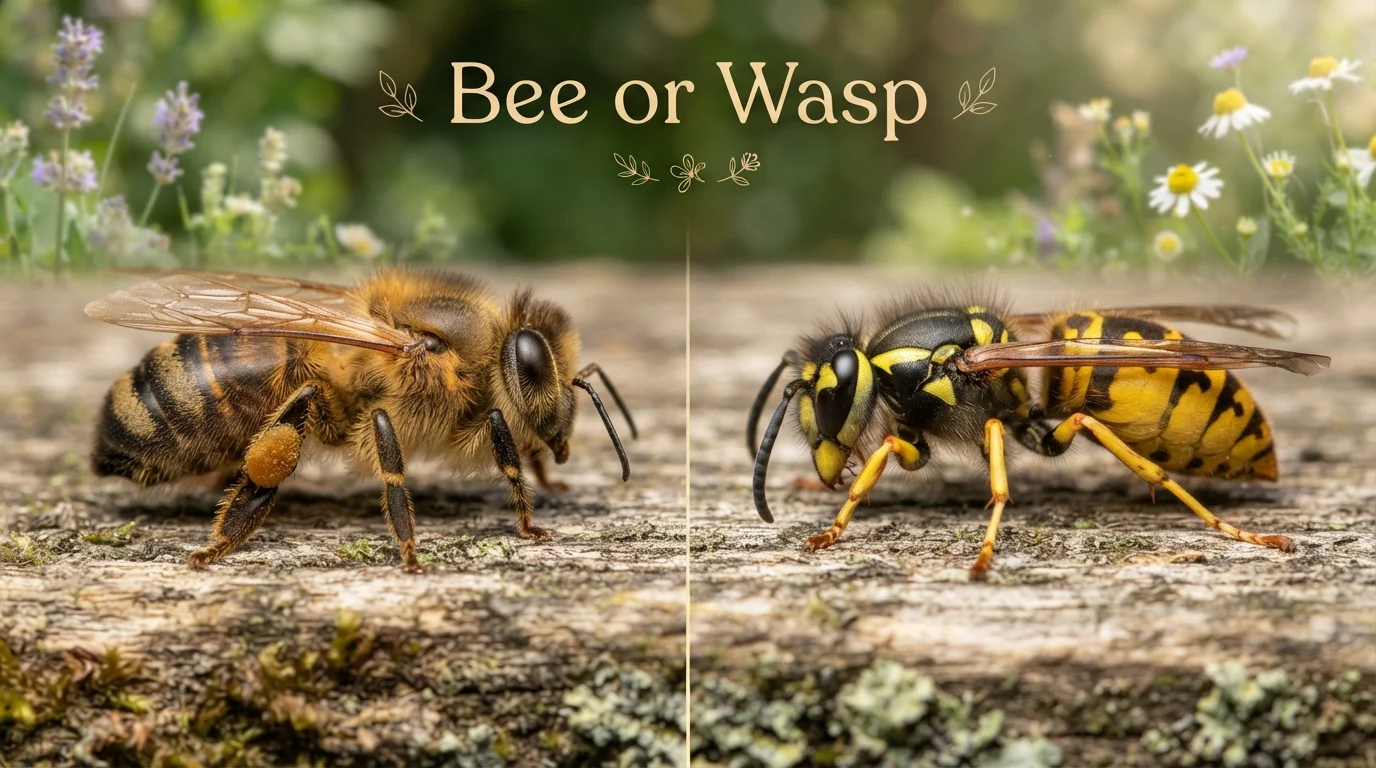
Bee vs wasp is a common search because many people see a flying insect and are not sure what it is. Some insects look similar, but bees and wasps are different animals.
They have different bodies, behaviors, nests, and diets. Many people also want to know which insect is more likely to sting and which one helps the environment.
This confusion is normal because both insects can be yellow and black and often fly around gardens, food, and flowers.
In this guide, you will learn the key differences between bees and wasps, how to identify them, which one is usually more aggressive, and what to do if you see one near your home.
Bee vs Wasp – Quick Answer
Bees are usually fuzzy, rounder, and feed on flower nectar and pollen. Wasps are usually smooth, slimmer, and can eat insects and human food. Bees are important pollinators, while many wasps are hunters. Wasps are often more aggressive than bees, especially near their nests.
Key Differences Between Bees and Wasps
Here are the easiest ways to tell them apart:
- Body: Bees look fuzzy. Wasps look smooth and shiny.
- Shape: Bees are rounder. Wasps are slimmer with a narrow waist.
- Food: Bees eat nectar and pollen. Wasps also eat other insects.
- Temper: Bees are usually calmer. Wasps can be more aggressive.
- Pollination: Bees are major pollinators. Wasps pollinate less.
Bee vs Wasp Comparison Table
| Feature | Bee | Wasp |
|---|---|---|
| Body | Fuzzy | Smooth |
| Shape | Rounder | Slender |
| Waist | Less narrow | Very narrow |
| Diet | Nectar, pollen | Insects, sweet foods |
| Pollination | Excellent | Limited |
| Aggression | Usually calm | Often more aggressive |
Bee vs Wasp in Everyday Situations
Knowing the difference between a bee and a wasp can help you in daily life. Here are some common examples.
In Your Garden
You see an insect moving from flower to flower.
It is most likely a bee if it has a fuzzy body and is collecting pollen. Bees help flowers, fruits, and vegetables grow.
If the insect is hunting bugs or flying quickly between plants, it may be a wasp.
At a Picnic
A yellow and black insect lands near your drink.
This is often a wasp. Wasps are attracted to sweet drinks, fruit, and meat.
Stay calm and cover your food. Do not wave your hands or try to hit the insect.
Around Your Home
You notice insects flying in and out of a small opening.
Watch from a safe distance.
If you see a gray, paper-like nest, it is likely a wasp nest. And if you notice wax combs or many fuzzy insects, it may be a bee colony.
If the nest is close to people or pets, contact a professional instead of removing it yourself.
In Nature
While hiking or walking in a park, you may see both bees and wasps.
Enjoy watching them from a distance. They are important parts of the ecosystem and usually leave people alone when not disturbed.
Simple Rules to Remember
You do not need to memorize every detail. Just remember these easy rules:
1: Fuzzy Means Bee
If the insect looks soft and fuzzy, it is probably a bee.
2: Thin Waist Means Wasp
If the insect has a narrow waist and a smooth body, it is probably a wasp.
3: Flowers or Food?
- Visiting flowers? Think bee.
- Hovering around your lunch? Think wasp.
These three simple rules will help you identify most bees and wasps.
Where Bees and Wasps Are Common
Both insects live in many parts of the world. However, you may notice them in different places.
| Location | Bees | Wasps |
|---|---|---|
| Gardens | Very common | Common |
| Farms | Very common | Common |
| Parks | Common | Common |
| Forests | Common | Common |
| Outdoor restaurants | Less common | Very common |
| Picnic areas | Less common | Very common |
Where Are Bees Most Active?
Bees are active wherever flowers bloom.
You will often find them in:
- Flower gardens
- Orchards
- Farms
- Meadows
- Parks
Where Are Wasps Most Active?
Wasps can live in many of the same places as bees. They are also attracted to areas where food is easy to find.
Common places include:
- Outdoor eating areas
- Trash bins
- Campsites
- Roof edges
- Sheds
- Trees
Related Nature Terms You Should Know
Learning these words will help you understand bees, wasps, and other insects even better.
- Pollination – The process of moving pollen between flowers so plants can produce seeds and fruit.
- Honeybee – A type of bee that makes honey and lives in large colonies.
- Bumblebee – A large, fuzzy bee known for its gentle nature and excellent pollination.
- Hornet – A large type of wasp that builds paper nests.
- Hive – The home where many bees live and store honey.
These related terms are useful if you want to learn more about insects, gardens, and wildlife.
FAQs
1. How can I quickly tell a bee from a wasp?
The easiest way is to look at the body. Bees are usually fuzzy and rounder, while wasps are smooth, shiny, and have a thin waist. Bees also spend more time on flowers, while wasps often search for food near people.
2. Which is more likely to sting, a bee or a wasp?
Wasps are generally more likely to sting because they are more defensive and can sting more than once. Bees are usually gentle and sting mainly when they feel threatened or when protecting their hive.
3. Are bees more helpful than wasps?
Bees are among the most important pollinators and help many crops and flowers grow. Wasps also benefit nature by eating insects that can damage gardens and plants. Both play valuable roles in the environment.
4. Should I remove a bee or wasp nest myself?
No. It is safest to leave nests alone whenever possible. If a nest is close to your home, doorway, or another busy area, contact a pest control professional or a local beekeeper if it is a bee colony that can be relocated.
5. Can bees and wasps both make honey?
No. Honey is made by honey bees. Wasps do not make or store honey like honey bees do.
6. Why are wasps attracted to my food?
Wasps enjoy sugary foods, fruit, meat, and sweet drinks. Outdoor meals and picnic tables are easy places for them to find food, especially during the warmer months.
Conclusion
Bees and wasps may look similar at first, but they are easy to tell apart once you know what to look for.
Bees are fuzzy, rounder, and spend their time collecting nectar and pollen from flowers. Wasps are smooth, slimmer, and often hunt insects or search for sweet foods. Bees are usually calmer, while wasps are more likely to defend their nests.
Both insects are important because they help keep nature healthy in different ways. The next time you spot one flying nearby, remember the simple rules from this guide.
With a quick look at its body, behavior, and favorite food, you can confidently tell whether it is a bee or a wasp.