Have you ever wondered if you should say caregiver or caretaker? You are not alone. Many people search for this keyword every day. They want to know which word is right.
The confusion is real. Both words look similar. Both sound similar. But they have different meanings. This can be tricky for writers, students, and professionals.
In this blog post, you will learn the clear difference. We will cover simple rules, real examples, and easy tips. By the end, you will know exactly which word to use. No more guessing. No more mistakes.
Let’s make this simple and clear for you.
Caregiver or Caretaker – Quick Answer
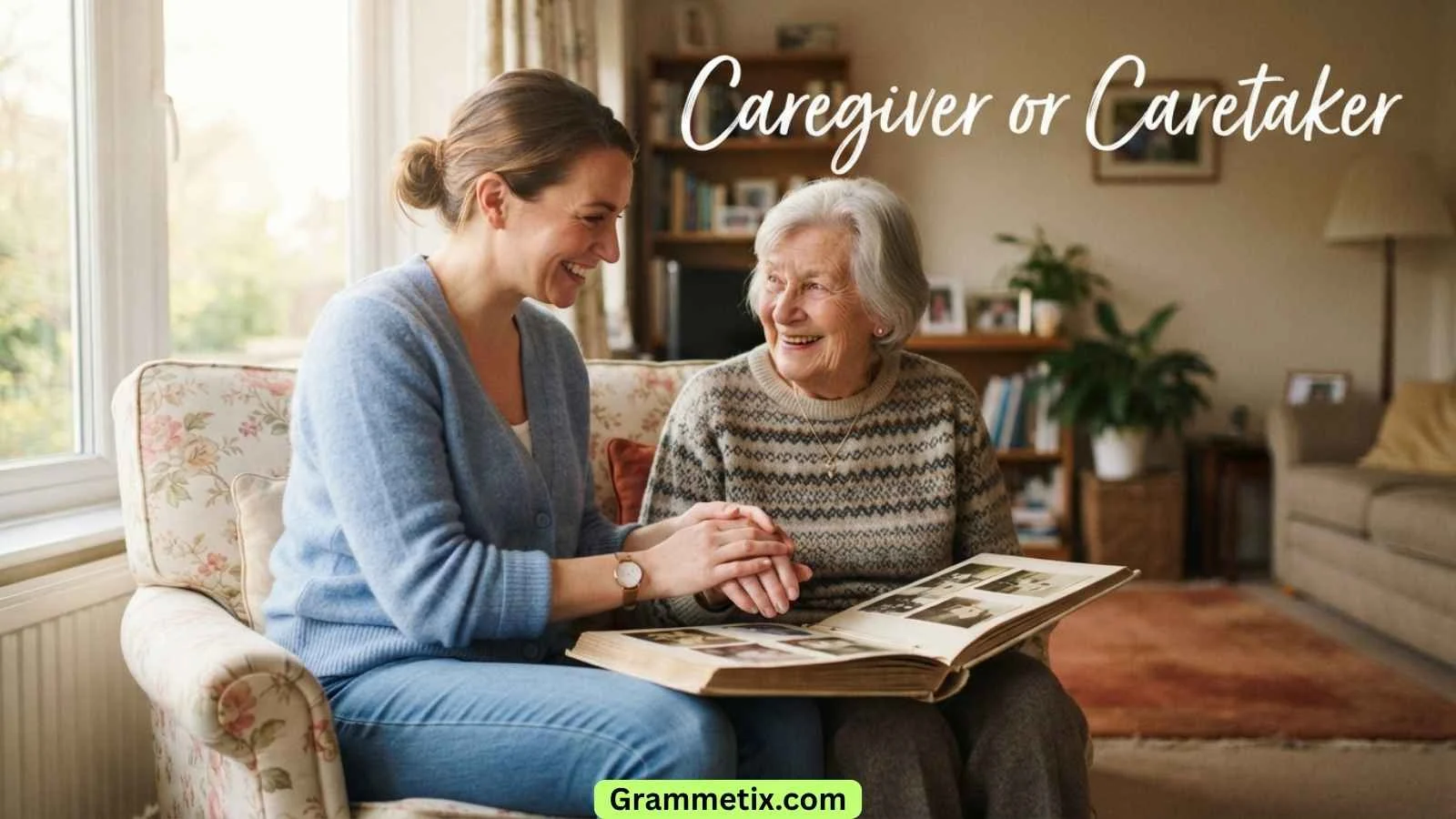
Caregiver is the right word for a person who cares for people. Caretaker is the right word for a person who cares for property or buildings. For example, a nurse is a caregiver. A janitor is a caretaker. Both spellings are correct, but they mean different things.
Key Difference Between Caregiver and Caretaker
- Caregiver = cares for people (children, elderly, sick)
- Caretaker = cares for property (buildings, gardens, houses)
- Caregiver is about helping people with daily needs
- Caretaker is about maintaining things and keeping them safe
- Caregiver builds emotional bonds. Caretaker focuses on practical tasks.
Comparison Table
| Caregiver | Caretaker |
|---|---|
| Cares for people | Cares for property |
| Gives emotional support | Keeps things in good condition |
| Works with children or elderly | Works as a janitor or groundskeeper |
| Often a family member or nurse | Often hired to watch a building |
| Focuses on health and wellbeing | Focuses on maintenance and safety |
Is Caregiver or Caretaker Correct or Incorrect?
Both are correct. The rule is simple:
In the United States, many people use both words to mean the same thing. But in the UK, the difference is more clear. Caretaker usually means someone who looks after a building. Caregiver is the best choice for someone who looks after people.
Why Do People Confuse Caregiver and Caretaker?
British vs American English
American English uses caregiver more often for personal care. British English uses carer for people and caretaker for property. This causes a lot of mix-ups.
Internet and Global Exposure
With so much content online, people see both words used in many ways. This can make it hard to know which one is correct. Social media, blogs, and websites often mix them up.
Education Differences
Many schools do not teach the difference between these words. People grow up hearing both and think they are the same. This leads to common mistakes.
The Origin of Caregiver and Caretaker
The words come from two simple ideas:
- Caregiver = “one who gives care”
- Caretaker = “one who takes care”
“Caregiver” became popular in the 1970s. It was used to describe people who helped sick or elderly family members. “Caretaker” is much older. It has been used for centuries to describe people who look after houses, land, and other property.
British English vs American English Spelling
The differences are clear:
- American English: Caregiver is for people. Caretaker can be for people or things.
- British English: Carer is for people. Caretaker is only for things.
- In the UK, caretaker is the same as “janitor” in the US.
Comparison Table
| Country | For People | For Property |
|---|---|---|
| USA | Caregiver | Caretaker |
| UK | Carer | Caretaker |
| Canada | Caregiver | Caretaker |
| Australia | Carer | Caretaker |
Which Spelling Should You Use?
For US Audience
Use caregiver for people and caretaker for things. Americans understand both words, but they prefer caregiver for personal care.
For UK/Commonwealth Audience
Use carer for people and caretaker for property. Do not use caregiver as much. It is seen as an American term.
For Global/SEO Writing
Use caregiver for people. It is the most commonly searched term online. It works best for websites, blogs, and articles about health and care.
How to Pronounce Caregiver and Caretaker
They sound different. The middle part of the word changes:
- Caregiver has a “gihv” sound
- Caretaker has a “tayk” sound
Both are easy to say and very similar at the start.
Formal vs Informal Usage of Caregiver and Caretaker
Academic Writing
Use caregiver when talking about health, medicine, and social work. It is the professional term for people who help others with daily needs.
Business Communication
In business, caretaker can mean a temporary manager. A “caretaker manager” takes over for a short time. This is common in British English.
Casual Conversation
Both words are fine in everyday speech. But remember: caregiver for people, caretaker for things. Most people will understand you either way.
Common Mistakes with Caregiver and Caretaker
1: Using Caretaker for a Nurse
- Incorrect: The hospital hired a new caretaker for the patients.
- Correct: The hospital hired a new caregiver for the patients.
- Why: Nurses care for people. They are caregivers, not caretakers.
2: Using Caregiver for a Janitor
- Incorrect: The school’s caregiver cleaned the floors.
- Correct: The school’s caretaker cleaned the floors.
- Why: Janitors care for buildings. They are caretakers, not caregivers.
3: Using Both Words for the Same Job
- Incorrect: My grandmother’s caretaker helps her bathe. My grandmother’s caregiver helps her bathe.
- Correct: My grandmother’s caregiver helps her bathe.
- Why: Stick to one word for the same person. This avoids confusion.
Caregiver and Caretaker in Everyday Examples
In Emails
“Hi Dr. Smith, I am my mother’s primary caregiver. I help her with medications and doctor visits.”
“The building caretaker will meet you at 3 PM to show you the apartment.”
In News
“The caregiver was praised for her years of dedicated service to the elderly community.”
“The local school is hiring a new caretaker for the grounds and facilities.”
In Social Media
“I am so proud to be a caregiver for my dad. It is hard work, but I love him.”
“The caretaker of this old house did a beautiful job restoring it!”
In Formal Writing
“Family members often serve as unpaid caregivers for their aging relatives.”
“The caretaker is responsible for all routine maintenance of the property.”
Simple Rule to Remember
- People = Caregiver: If you care for a person, use caregiver.
- Things = Caretaker: If you care for a building or land, use caretaker.
- Think “give” and “take”: Caregivers give care to people. Caretakers take care of things.
Keep this simple rule in mind and you will never make a mistake!
Caregiver vs. Caretaker – Google Trends & Usage Data
Caregiver is much more popular online. It is the most searched term on Google. People search for caregiver when looking for help with health and aging.
Caretaker is less common. It is mostly used when talking about houses, property, or temporary management.
- In the USA: Caregiver is used most for personal care.
- In the UK: Carer is used more. Caretaker is for property.
- In Australia: Carer is the standard term.
Related Grammar Terms You Should Know
- Carer: The British English word for someone who cares for a person.
- Janitor: A person who cleans a building. This is a type of caretaker.
- Custodian: Another word for a caretaker. Someone who looks after property.
- Guardian: Someone who cares for a child or another person.
- Home Health Aide: A professional caregiver. This person helps with medical and daily needs.
FAQs
Is caretaker a real word?
Yes, caretaker is a real word. It means someone who looks after property, buildings, or land. It can also mean a temporary manager in business.
Can caretaker and caregiver be used interchangeably?
In some places, yes. In American English, many people do use them the same way. But it is better to use caregiver for people and caretaker for things. This is the most correct usage.
Who is a caregiver?
A caregiver is a person who looks after someone who is sick, old, or disabled. This person can be a family member, friend, or professional. They help with daily tasks like bathing, eating, and taking medicine.
Who is a caretaker?
A caretaker is a person who looks after property or things. This person keeps buildings and land in good condition. In the UK, a caretaker can also be a janitor. In the US, a caretaker may also look after people.
Which word is more common in the UK?
In the UK, people use carer for personal care. They use caretaker for property. Caregiver is not as common in the UK. It is seen as an American word.
Is caregiver a job title?
Yes, caregiver is a job title. Many professionals work as caregivers. They help people with daily tasks and medical needs. The job can be paid or unpaid. Family members are also called caregivers.
What is a caretaker government?
A caretaker government is a temporary government. It runs a country until a new government is formed. This term is common in British English.
Conclusion
The difference between caregiver and caretaker is simple. Use caregiver for people and caretaker for property. This rule works in most English-speaking countries.
In the US, people often mix the words. But if you want to be correct, always think about what is being cared for. If it is a person, say caregiver. If it is a building or land, say caretaker.
This will help you write clearly and correctly. Now you can use both words with confidence!