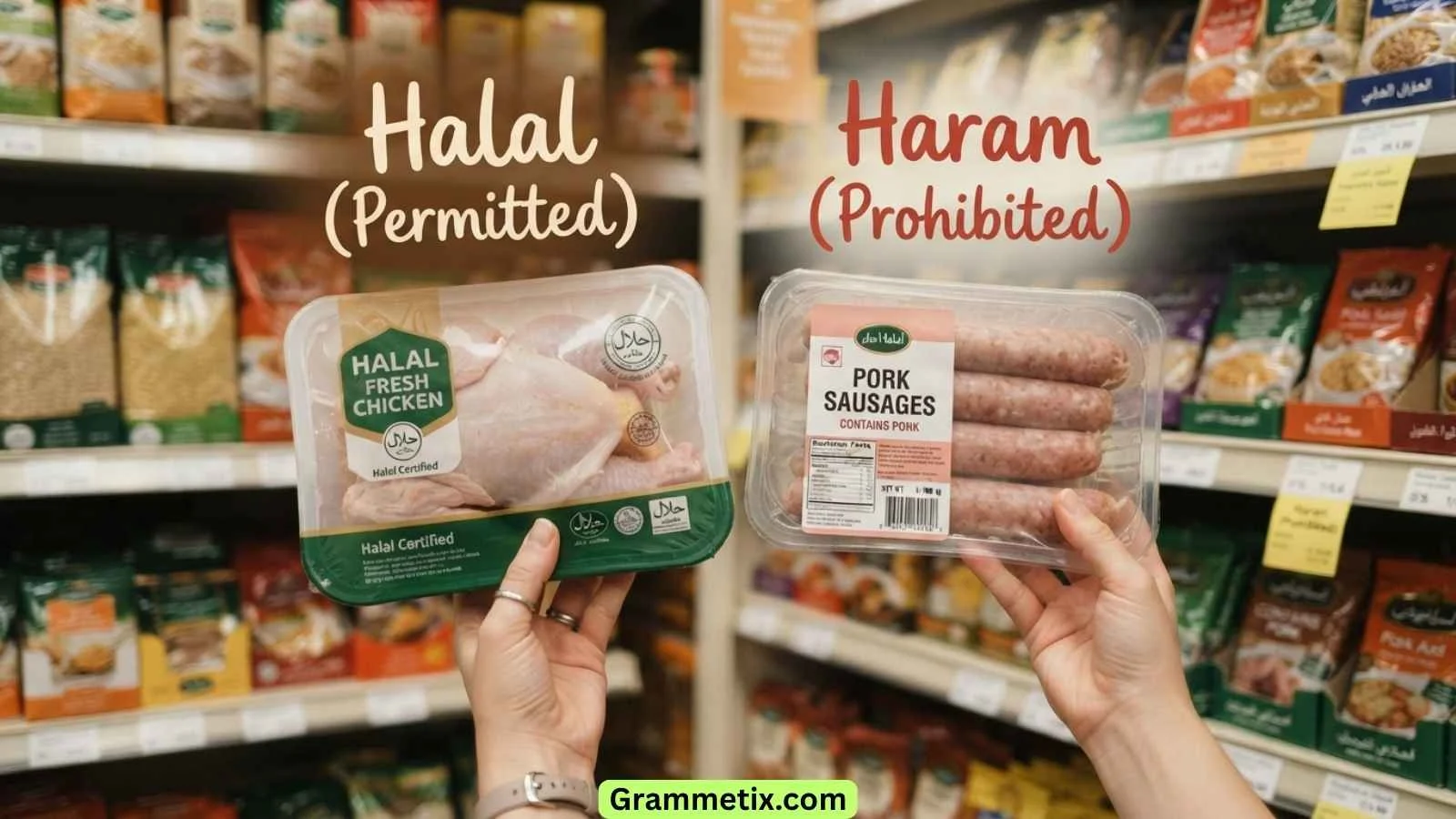
Halal or haram is a common question for people learning about Islam. Many people see these words online, on food labels, or in daily conversations. They want to know what each word means and how they are different.
The confusion happens because both words come from Arabic and are often used together. Yet, they have opposite meanings. Knowing the difference helps you understand Islamic teachings and make better choices.
In this guide, you will learn what halal and haram mean, how they are used, their history, and many real-life examples. Everything is explained in very simple English.
Halal or Haram – Quick Answer
Halal means something that is allowed or lawful in Islam. Haram means something that is forbidden or not allowed in Islam. These are not different spellings of the same word. They are two separate words with opposite meanings.
What Does Halal Mean?
The Arabic word halal (حلال) means permitted, lawful, or allowed.
Anything that follows Islamic teachings can be called halal. The word is most often used for food, but it also applies to money, business, clothing, relationships, and everyday actions.
Examples
- Eating properly prepared halal chicken is allowed.
- Working honestly is halal.
- Buying and selling fairly is halal.
- Speaking kindly to others is halal.
- Wearing modest clothing is halal.
People often look for a halal certification when buying food. This shows the product meets Islamic dietary rules.
What Does Haram Mean?
The Arabic word haram (حرام) means forbidden, unlawful, or prohibited.
Muslims are taught to avoid haram actions because they go against Islamic teachings.
Haram can refer to food, drinks, money, behavior, and many other parts of life.
Examples
- Drinking alcohol is haram.
- Eating pork is haram.
- Stealing is haram.
- Gambling is haram.
- Taking interest (riba) is considered haram in Islamic law.
The goal is to avoid what is haram and choose what is halal whenever possible.
Key Differences Between Halal and Haram
| Feature | Halal | Haram |
|---|---|---|
| Meaning | Allowed | Forbidden |
| Arabic Meaning | Lawful | Unlawful |
| Religious Status | Permitted in Islam | Prohibited in Islam |
| Should Muslims Do It? | Yes | No |
| Example | Halal chicken | Pork |
Main Differences
- Halal means permitted.
- Haram means forbidden.
- Halal actions earn approval.
- Haram actions should be avoided.
- The two words are complete opposites.
Why Do People Confuse Halal and Haram?
Many beginners think halal and haram are similar because they often appear together.
Here are the main reasons for the confusion.
They Sound Similar
Both words come from Arabic and have a similar rhythm. New learners sometimes mix them up.
They Are Often Used Together
People frequently say “Is this halal or haram?” Because the words appear side by side, some people forget which one means allowed.
They Cover Many Topics
The words apply to food, business, clothing, money, entertainment, and behavior. This wide use can make learning harder at first.
Different Levels of Knowledge
Some people only know halal food. They may not realize the words also describe actions, earnings, and daily behavior.
Origin and Meaning of Both Words
Both words come from the Arabic language and have been used for centuries in Islamic teachings.
Halal comes from an Arabic root that means to make lawful or permitted.
Haram comes from an Arabic root that means to forbid or make sacred by restricting access. In Islamic law, it refers to things that are not allowed.
These terms appear throughout Islamic teachings and help Muslims understand what is acceptable and what should be avoided in daily life.
Although the words are Arabic, they are now recognized around the world. Many food products, restaurants, and businesses use the word halal to show they meet Islamic requirements.
Halal and Haram in Food
Food is the most common place where people hear the words halal and haram.
Halal food follows Islamic dietary rules. Haram food does not.
Here are some common examples.
| Halal Food | Haram Food |
|---|---|
| Beef from a halal-certified source | Pork and pork products |
| Chicken prepared the halal way | Meat not prepared according to Islamic rules |
| Fresh fruits and vegetables | Food made with pork ingredients |
| Fish and seafood (generally considered halal) | Alcoholic drinks |
| Milk, eggs, and grains | Food containing intoxicating substances |
Everyday Examples
- This restaurant serves halal meals.
- Always check the halal label before buying meat.
- Pork is haram for Muslims.
- Beer and wine are haram because they contain alcohol.
Many companies now offer halal-certified products to help Muslim customers shop with confidence.
Halal and Haram in Money and Business
Islam also teaches that money should be earned in honest and fair ways.
A job or business is halal when it follows Islamic principles.
Some ways of earning money are considered haram because they involve injustice or forbidden activities.
Examples of Halal Income
- Working as a teacher.
- Running an honest shop.
- Selling lawful products.
- Providing useful services.
- Farming or manufacturing lawful goods.
Examples of Haram Income
- Stealing money.
- Selling illegal drugs.
- Running a gambling business.
- Selling alcohol where Islamic law forbids it.
- Taking part in fraud or scams.
The main rule is simple: earn money honestly and avoid harming others.
Halal and Haram in Clothing and Lifestyle
Halal and haram also guide personal behavior and daily choices.
These teachings encourage honesty, kindness, and respect.
Halal Lifestyle Examples
- Speaking truthfully.
- Respecting parents.
- Dressing modestly.
- Helping people in need.
- Treating others fairly.
Haram Lifestyle Examples
- Lying.
- Cheating.
- Gossiping about others.
- Hurting innocent people.
- Taking something that does not belong to you.
These examples show that halal and haram are about much more than food.
Common Misunderstandings
Many people misunderstand these terms. Here are a few common myths.
1: Halal Only Means Food
This is not true.
Halal also applies to business, money, behavior, clothing, and daily life.
2: Haram Means “Bad People”
No.
Haram describes an action or thing that is forbidden. It does not describe a person’s worth.
3: Every Non-Halal Item Is Haram
Not always.
Some matters are discussed differently by Islamic scholars. Others may be permissible depending on the situation. When unsure, Muslims often seek guidance from trusted religious scholars.
4: Halal Is Only for Muslims
Many non-Muslims buy halal food because of personal, cultural, or dietary preferences. However, halal rules come from Islamic teachings.
Simple Rule to Remember
Remember these easy rules:
- Halal = Allowed.
- Haram = Forbidden.
- If something follows Islamic teachings, it is halal.
- If something goes against Islamic teachings, it is haram.
A simple memory trick is:
Halal = Happy to do.
Haram = Hold back and avoid.
Global Usage and Understanding
Today, the words halal and haram are understood around the world.
Countries with large Muslim populations use these terms every day.
Common Usage by Region
| Country or Region | Common Usage |
|---|---|
| Saudi Arabia | Daily religious and legal use |
| Pakistan | Food, business, and everyday life |
| Indonesia | Food labels, restaurants, and products |
| Malaysia | Government-certified halal products |
| United Kingdom | Halal food markets and restaurants |
| United States | Halal grocery stores and restaurants worldwide |
The word halal is especially common on food packaging because many companies serve Muslim customers around the world.
Related Islamic Terms You Should Know
Learning these words will help you understand halal and haram even better.
Makruh
An action that is disliked but not strictly forbidden. Avoiding it is generally encouraged.
Mubah
An action that is allowed. A person may choose to do it or leave it.
Fard
A duty that Muslims are required to perform, such as the five daily prayers.
Sunnah
Practices and teachings of the Prophet Muhammad that Muslims are encouraged to follow.
Tayyib
A word meaning pure, wholesome, and good. Food can be both halal and tayyib, meaning it is lawful and wholesome.
FAQs
Is halal the opposite of haram?
Yes. Halal means something is allowed in Islam, while haram means it is forbidden. They are opposite terms.
Can something be both halal and haram?
No. A specific action or item cannot be both at the same time under the same circumstances. However, different situations may change how Islamic rulings apply, so people often consult qualified scholars when unsure.
Is halal only about food?
No. Halal covers food, business, clothing, money, behavior, and many other parts of everyday life.
Why is pork considered haram?
Islamic teachings clearly forbid Muslims from eating pork. This rule comes from the Quran and is followed by Muslims around the world.
Do all Muslims follow halal rules?
Muslims aim to follow halal rules as part of their faith. Like people of any religion, individuals may practice their beliefs to different degrees.
How can I know if a product is halal?
Look for a trusted halal certification on the packaging or ask the manufacturer or seller. Many restaurants and food companies also display halal certificates.
Conclusion
Understanding halal or haram is easier once you know their simple meanings. Halal refers to what Islam allows, while haram refers to what Islam forbids. These words apply to much more than food. They also guide business, money, clothing, and daily behavior.
If you remember one thing, let it be this: halal means permitted, and haram means prohibited. This simple rule will help you understand conversations, food labels, and Islamic teachings with greater confidence.
If you are learning about Islam or simply curious, knowing the difference between these two important terms gives you a stronger understanding of their role in everyday life.