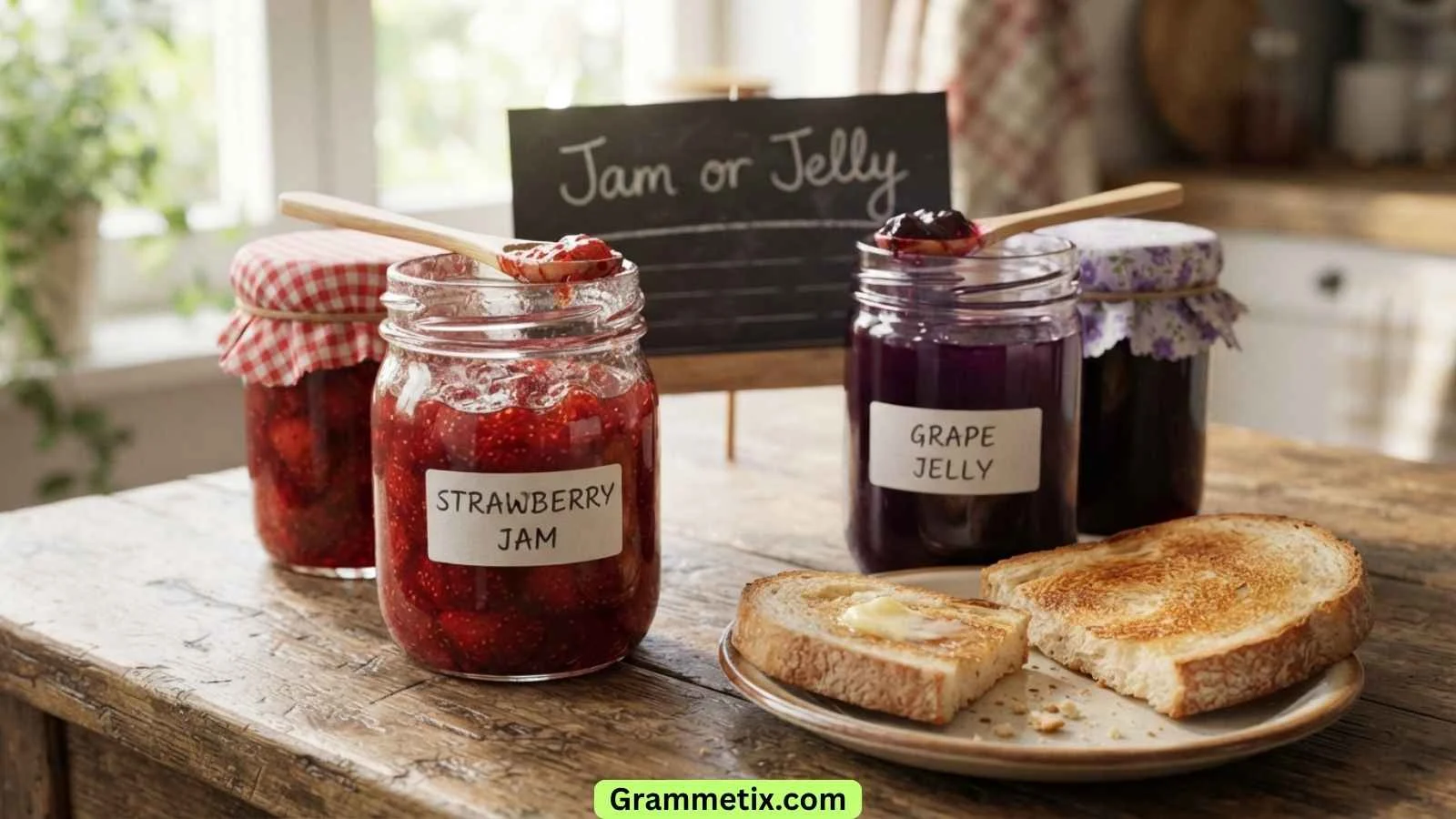
Jam or jelly—which one belongs on your toast? This is a common question because both look similar and are made from fruit. Many people search for jam or jelly when shopping, following a recipe, or choosing a breakfast spread.
The names are often used as if they mean the same thing, but they are actually different foods. The biggest difference is how they are made and how they taste. Knowing this can help you pick the right spread every time.
In this guide, you’ll learn what jam and jelly are, their key differences, how they are made, where each one works best, and which one you should choose for sandwiches, baking, or everyday meals.
By the end, you’ll never confuse jam and jelly again.
Jam or Jelly – Quick Answer
Both Jam and jelly are fruit spreads, but they are not the same. Jam is made from crushed or chopped fruit, so it contains small fruit pieces. Jelly is made from filtered fruit juice, giving it a smooth and clear texture. Choose jam if you like bits of fruit, and choose jelly if you prefer a silky, even spread.
What Is Jam?
Jam is a sweet fruit spread made by cooking crushed or chopped fruit with sugar. Many recipes also add pectin and lemon juice to help the jam set properly.
Unlike jelly, jam keeps small pieces of fruit. This gives it a thicker texture and a richer fruit taste.
People enjoy jam because it feels homemade and full of real fruit. It spreads easily while still keeping some texture.
Common fruits used to make jam include:
- Strawberry
- Raspberry
- Blueberry
- Peach
- Apricot
- Blackberry
- Mango
Jam is often used on:
- Toast
- Biscuits
- Croissants
- Muffins
- Peanut butter sandwiches
- Cakes and pastries
Because jam contains fruit pieces, many people feel it has a fresher and more natural taste.
What Is Jelly?
Jelly is another popular fruit spread, but it is made differently. Instead of whole fruit, jelly is made from clear fruit juice mixed with sugar and pectin.
During preparation, the fruit juice is strained to remove seeds, pulp, and fruit pieces. This creates a smooth, shiny spread.
Jelly has a soft, even texture that spreads very easily.
Popular fruits used for jelly include:
- Grape
- Apple
- Cranberry
- Red currant
- Mint jelly (made with herbs and fruit pectin)
- Pepper jelly
People commonly use jelly on:
- Toast
- Bread
- Crackers
- Sandwiches
- Cheese boards
- Glazed meats
Its smooth texture makes jelly a favorite for children and anyone who prefers spreads without fruit chunks.
Key Differences Between Jam and Jelly
Although both are made from fruit, they are different in several important ways.
Quick Comparison
- Jam contains crushed or chopped fruit.
- Jelly is made from filtered fruit juice.
- Jam has a thicker texture with fruit pieces.
- Jelly is smooth, clear, and free from fruit chunks.
- Both are delicious but suit different tastes.
| Feature | Jam | Jelly |
|---|---|---|
| Main Ingredient | Crushed or chopped fruit | Filtered fruit juice |
| Texture | Thick with fruit pieces | Smooth and clear |
| Appearance | Cloudy with visible fruit | Transparent or nearly clear |
| Fruit Content | Contains real fruit pieces | Contains only fruit juice |
| Spreadability | Thick and slightly chunky | Soft and very smooth |
| Best For | Toast, pastries, baking | Sandwiches, crackers, glazes |
| Flavor | Rich, fresh fruit taste | Light and smooth fruit flavor |
For most people, the biggest difference is texture. If you enjoy real fruit in every bite, jam is a great choice. If you prefer a smooth spread that glides easily across bread, jelly may be the better option.
Ingredients Used in Jam and Jelly
Jam and jelly share many of the same basic ingredients. However, the type of fruit they use is different. This is what gives each spread its unique texture and taste.
Ingredients in Jam
Jam is made with whole fruit or crushed fruit. The fruit is cooked until it becomes soft and thick.
Common ingredients include:
- Crushed or chopped fruit
- Sugar
- Pectin (natural or added)
- Lemon juice
Some homemade jams use less sugar. Others use natural sweeteners. No matter the recipe, the fruit remains the main ingredient.
Ingredients in Jelly
Jelly starts with fruit juice instead of whole fruit. The juice is carefully strained to remove pulp, seeds, and skin.
Common ingredients include:
- Clear fruit juice
- Sugar
- Pectin
- Lemon juice
Because the fruit solids are removed, jelly has a smooth and glossy look.
Ingredient Comparison
| Ingredient | Jam | Jelly |
|---|---|---|
| Whole or crushed fruit | ✔ Yes | ✘ No |
| Fruit juice | ✔ Sometimes | ✔ Yes |
| Sugar | ✔ Yes | ✔ Yes |
| Pectin | ✔ Often | ✔ Often |
| Lemon juice | ✔ Sometimes | ✔ Sometimes |
| Fruit pieces | ✔ Yes | ✘ No |
Even though many ingredients are the same, using whole fruit or only fruit juice makes a big difference in the final product.
Texture: Jam vs Jelly
Texture is the easiest way to tell jam and jelly apart.
Jam feels thick and slightly chunky. Small fruit pieces stay in the spread after cooking. Every bite gives you a little bit of real fruit.
Jelly is much smoother. It has no fruit chunks because only the juice is used. It spreads evenly across bread without leaving lumps.
Here is a simple comparison.
| Texture Feature | Jam | Jelly |
|---|---|---|
| Smoothness | Medium | Very smooth |
| Fruit pieces | Yes | No |
| Thickness | Thick | Soft and firm |
| Spreadability | Good | Excellent |
| Appearance | Rustic | Clear and glossy |
If you enjoy a homemade feel, jam is a great choice. If you like a silky spread, jelly is likely the better option.
Taste: Which Is Sweeter?
Both jam and jelly are sweet, but they do not taste exactly the same.
Jam has a stronger fruit flavor. Since it contains real fruit pieces, you can taste more of the fruit’s natural sweetness and freshness.
Jelly has a lighter and cleaner taste. It feels smoother in the mouth because there are no fruit chunks.
The sweetness also depends on the recipe. Some brands make low-sugar versions of both jam and jelly.
Jam Taste
- Rich fruit flavor
- Fresh fruit texture
- Slightly thicker mouthfeel
- Natural fruit taste
Jelly Taste
- Smooth fruit flavor
- Even sweetness
- Light texture
- Clean finish
Neither one is better than the other. It simply depends on what you enjoy eating.
How Jam and Jelly Are Made
Jam and jelly follow similar cooking steps, but they begin with different forms of fruit.
How Jam Is Made
- Wash and prepare fresh fruit.
- Crush or chop the fruit.
- Add sugar and lemon juice.
- Cook until the fruit softens.
- Add pectin if needed.
- Boil until the mixture thickens.
- Pour into clean jars and seal.
The fruit pieces stay in the mixture from start to finish.
How Jelly Is Made
- Wash fresh fruit.
- Cook the fruit until it releases juice.
- Strain the juice through a fine cloth.
- Mix the clear juice with sugar.
- Add pectin.
- Boil until the jelly sets.
- Pour into jars and let it cool.
The straining step is what makes jelly smooth and clear.
Common Uses for Jam or Jelly
Both spreads are delicious, but people often use them in different ways.
Best Uses for Jam
Jam works well when you want extra fruit flavor and texture.
Popular uses include:
- Toast
- Bagels
- Croissants
- Muffins
- Yogurt
- Cake fillings
- Cookies
- Thumbprint biscuits
- Cheesecake toppings
- Pancakes and waffles
Jam is also popular in baking because the fruit pieces add extra flavor.
Best Uses for Jelly
Jelly is perfect when you want a smooth finish.
People often use it for:
- Peanut butter and jelly sandwiches
- Toast
- Crackers
- Biscuits
- Cheese platters
- Meat glazes
- Pastries
- Fruit sauces
- Dessert toppings
Because jelly spreads so evenly, it is often the first choice for children’s sandwiches and simple breakfasts.
Many cooks also use jelly in savory recipes. Grape, apple, and pepper jelly can add sweetness to sauces, roasted meats, and appetizers.
Which Should You Choose?
The best choice depends on your taste and how you plan to use it.
If you enjoy real fruit and a thicker spread, jam is a great option. If you prefer a smooth texture that spreads easily, jelly may suit you better.
There is no right or wrong choice. Both are tasty and work well in different recipes.
Choose Jam If You:
- Like small fruit pieces.
- Want a rich fruit flavor.
- Enjoy homemade-style spreads.
- Bake cakes, cookies, or pastries.
- Prefer a thicker texture.
Choose Jelly If You:
- Like a smooth spread.
- Do not enjoy fruit chunks.
- Make peanut butter and jelly sandwiches.
- Want an even layer on bread.
- Use fruit spreads for glazes and sauces.
Quick Buying Tip
Read the label before you buy. Some jars look similar, but the ingredients will tell you whether the product is jam or jelly.
Jam or Jelly Around the World
Jam and jelly are enjoyed in many countries. However, the names and favorites can vary.
In the United States, both jam and jelly are easy to find in grocery stores. Grape jelly is especially popular for peanut butter and jelly sandwiches.
In the United Kingdom, people usually eat more jam than jelly. Strawberry jam and raspberry jam are common breakfast favorites.
Many European countries also enjoy fruit preserves made with whole fruit. These are often served with fresh bread, pastries, or cheese.
In Australia and New Zealand, jam is a common breakfast spread. Homemade jams are also very popular.
Popular Choices by Country
| Country | Most Popular Spread | Common Flavors |
|---|---|---|
| United States | Jelly and Jam | Grape, Strawberry, Raspberry |
| United Kingdom | Jam | Strawberry, Raspberry, Blackcurrant |
| Canada | Jam and Jelly | Strawberry, Blueberry, Grape |
| Australia | Jam | Apricot, Strawberry, Plum |
| France | Jam | Apricot, Cherry, Fig |
No matter where you live, both spreads are loved for their sweet fruit flavor.
Common Mistakes About Jam and Jelly
Many people believe jam and jelly are exactly the same. Here are some common mistakes to avoid.
1: Thinking Jam and Jelly Are Identical
Incorrect: Jam and jelly are the same product.
Correct: Jam contains fruit pieces, while jelly is made from fruit juice.
Explanation: The main difference is the type of fruit used during preparation.
2: Believing Jelly Contains Gelatin
Incorrect: Jelly always contains gelatin.
Correct: Fruit jelly is usually made with fruit juice, sugar, and pectin.
Explanation: The word “jelly” can mean different foods in different countries. Fruit jelly spreads normally do not contain gelatin.
3: Using Jam and Jelly the Same Way in Every Recipe
Incorrect: Every recipe works the same with jam or jelly.
Correct: Some recipes need the texture of jam, while others work better with smooth jelly.
Explanation: The final texture of baked goods and sauces can change depending on which spread you use.
4: Thinking One Is Healthier Than the Other
Incorrect: Jam is always healthier than jelly.
Correct: Nutrition depends on the ingredients and sugar content.
Explanation: Always check the nutrition label if you want a lower-sugar option.
Jam or Jelly in Everyday Life
You will see jam and jelly used in many daily situations. Choosing the right one depends on what you are making.
In Breakfast
Jam is delicious on toast, croissants, muffins, and pancakes because of its rich fruit texture.
Jelly is perfect for soft bread and peanut butter sandwiches because it spreads smoothly.
In Baking
Jam is often used as a filling for cakes, cookies, pastries, and doughnuts.
Jelly works well as a shiny glaze for fruit tarts and baked desserts.
In Cooking
Jam can be mixed into sauces for chicken, pork, or vegetables to add sweetness.
Jelly is commonly brushed onto roasted meats or stirred into barbecue sauces.
In Lunchboxes
Many parents choose jelly for sandwiches because it spreads quickly and evenly.
Others prefer jam because children can taste real fruit pieces.
In Gift Giving
Homemade jars of jam are popular gifts during holidays and special occasions.
Special fruit jellies are also given as gourmet gifts with crackers and cheese.
Healthy Alternatives and Buying Tips
If you want a healthier fruit spread, there are many options to explore.
Look for products with:
- Less added sugar
- More real fruit
- Natural ingredients
- No artificial colors
- No artificial flavors
You can also make jam or jelly at home. Homemade versions let you control the amount of sugar and choose your favorite fruits.
Shopping Tips
- Read the ingredient list first.
- Check the fruit percentage.
- Compare sugar content.
- Choose trusted brands.
- Refrigerate after opening for the best freshness.
A little time spent reading the label can help you pick the spread that matches your taste and dietary needs.
Jam vs Jelly – Google Trends & Popularity
Jam and jelly are both popular around the world. However, their popularity changes from one country to another.
In the United States, people search for both terms often. Jelly is especially popular because of the famous peanut butter and jelly sandwich. Jam is also common and is widely used for breakfast and baking.
In the United Kingdom, jam is searched much more than jelly. People usually spread strawberry or raspberry jam on toast, scones, and pastries.
Many countries in Europe, Australia, and New Zealand also use the word jam more often than jelly when talking about fruit spreads.
Popular Usage by Country
| Country | More Common Term | Popular Examples |
|---|---|---|
| United States | Jam and Jelly | Grape jelly, strawberry jam |
| United Kingdom | Jam | Strawberry jam, raspberry jam |
| Canada | Jam and Jelly | Blueberry jam, grape jelly |
| Australia | Jam | Apricot jam, plum jam |
| New Zealand | Jam | Mixed berry jam, peach jam |
Search interest also increases during the summer when fresh fruit is in season. Many people look for homemade jam and jelly recipes during this time.
Related Food Terms You Should Know
Learning a few related terms can help you understand fruit spreads even better.
Preserves
Preserves are made with large pieces of fruit or even whole fruits. They have a chunky texture and a rich fruit flavor.
Marmalade
Marmalade is a fruit spread usually made from citrus fruits like oranges, lemons, or grapefruits. It often contains small pieces of peel, giving it a slightly bitter taste.
Fruit Butter
Fruit butter is made by slowly cooking fruit until it becomes smooth and thick. It usually contains no butter. Apple butter is one of the most popular examples.
Compote
Compote is fruit cooked with sugar and spices. It is softer than jam and often served warm over pancakes, yogurt, or desserts.
Chutney
Chutney is a sweet and savory spread made with fruit, vegetables, vinegar, sugar, and spices. It is commonly served with meat, cheese, or curry dishes.
FAQs
Is jam healthier than jelly?
Not always. Both can contain similar amounts of sugar. Some jams have more fruit, while some jellies have less sugar. Always check the nutrition label before buying.
Can I use jam instead of jelly?
Yes. In many recipes, you can replace jelly with jam. Keep in mind that jam contains fruit pieces, so the texture may be slightly different.
Why is jelly clear but jam is not?
Jelly is made from filtered fruit juice, so it looks clear and smooth. Jam contains crushed fruit, making it thicker and less transparent.
Which is better for peanut butter sandwiches?
Many people choose jelly because it spreads smoothly. However, if you enjoy fruit pieces, jam is also a delicious option.
Does jam contain real fruit?
Yes. Jam is made from crushed or chopped fruit mixed with sugar. That is why you can often see and taste small fruit pieces.
What is the difference between jam, jelly, and preserves?
Jam contains crushed fruit. Jelly is made from fruit juice only. Preserves contain larger pieces or whole fruits, giving them the chunkiest texture.
Conclusion
Now you know the difference between jam or jelly. Although both are sweet fruit spreads, they are made in different ways.
Jam contains crushed or chopped fruit, giving it a thick texture and rich fruit flavor. Jelly is made from filtered fruit juice, making it smooth, clear, and easy to spread.
Neither one is better than the other. The right choice depends on your personal taste and how you plan to use it. If you enjoy fruit pieces, choose jam. If you prefer a silky, smooth spread, choose jelly.
Understanding this simple difference will help you shop with confidence and choose the perfect spread for every meal.