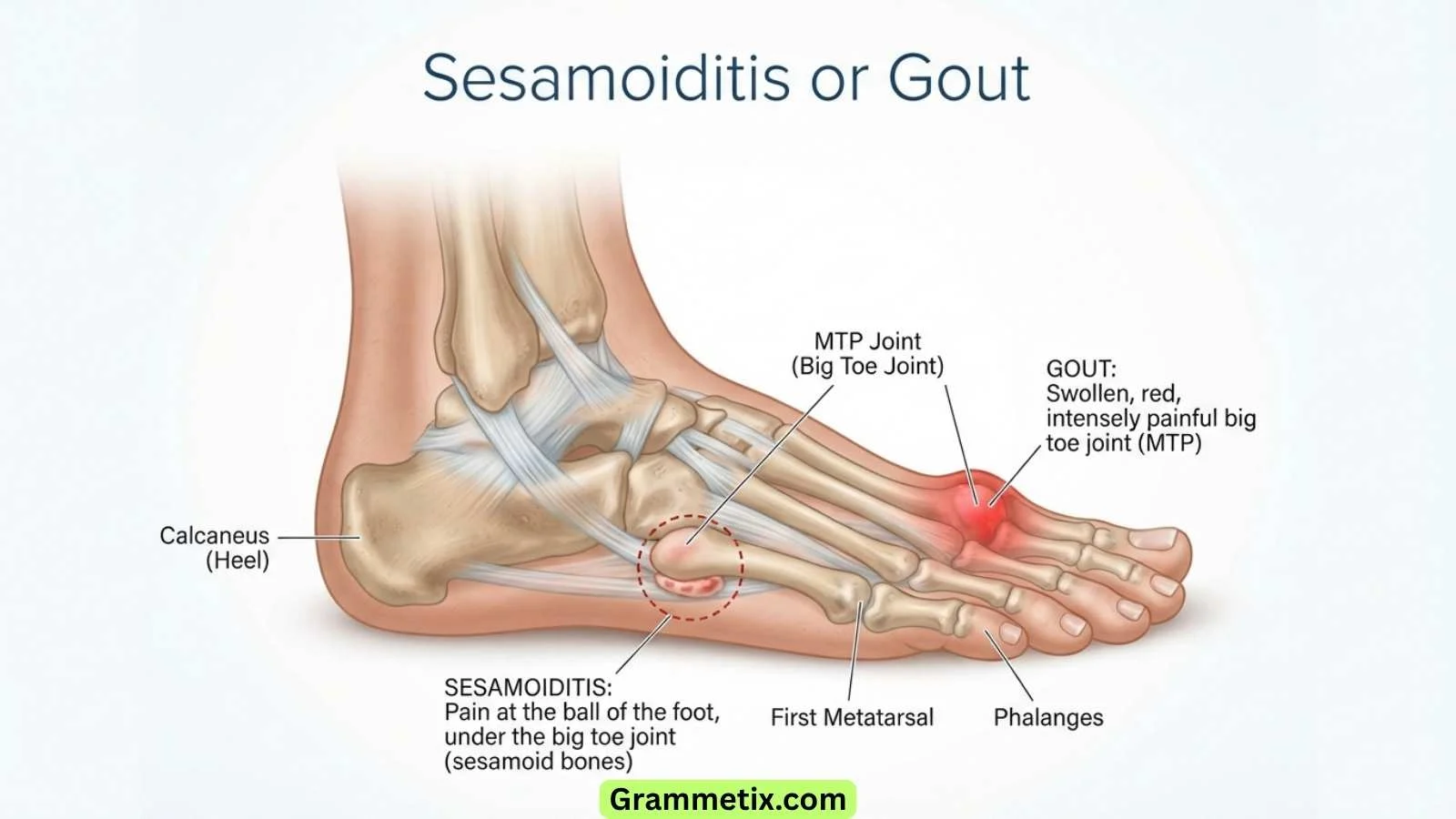
Sesamoiditis or gout can both cause pain near your big toe. That is why many people confuse them. At first, the pain may feel similar. But these conditions have very different causes and treatments.
If you choose the wrong treatment, your pain may last longer. Knowing the difference helps you get the right care sooner.
In this guide, you will learn what sesamoiditis and gout are, their symptoms, causes, treatments, and simple ways to tell them apart.
By the end, you should feel more confident about understanding these common foot problems.
Sesamoiditis or Gout – Quick Answer
Sesamoiditis is an overuse injury that causes inflammation beneath the big toe. Gout is a form of arthritis caused by uric acid crystals in a joint. While both can cause pain near the big toe, gout usually starts suddenly with severe pain, while sesamoiditis often develops slowly from repeated pressure.
What Is Sesamoiditis?
Sesamoiditis is inflammation of the small sesamoid bones beneath your big toe joint. These tiny bones act like pulleys. They help your tendons move smoothly and support your foot while walking or running.
The condition usually develops over time.
Common symptoms include:
- Pain under the big toe
- Pain that gets worse during activity
- Mild swelling
- Trouble pushing off while walking
- Tenderness when pressing beneath the toe
People who often develop sesamoiditis include:
- Runners
- Dancers
- Athletes
- People with high foot arches
- Anyone who spends long hours standing
What Is Gout?
Gout is a type of arthritis. It happens when too much uric acid builds up in the blood. Sharp uric acid crystals collect inside a joint and cause sudden inflammation.
The big toe is one of the most common places for gout attacks.
Common symptoms include:
- Sudden severe pain
- Redness
- Swelling
- Warm skin
- Very sensitive joint
- Pain that may wake you at night
A gout attack often begins without warning. Even a bedsheet touching the toe may hurt.
Key Differences Between Sesamoiditis and Gout
Although both conditions affect the foot, they are not the same.
| Feature | Sesamoiditis | Gout |
|---|---|---|
| Main cause | Overuse injury | Uric acid crystals |
| Pain starts | Slowly | Suddenly |
| Pain location | Under the big toe | Big toe joint |
| Swelling | Mild | Often severe |
| Redness | Rare | Common |
| Fever | No | Sometimes with severe attacks |
| Treatment | Rest and support | Medicines to reduce inflammation |
Quick Summary
- Sesamoiditis comes from repeated stress.
- Gout comes from crystal buildup.
- Gout usually appears suddenly.
- Sesamoiditis develops gradually.
- Both need different treatments.
Symptoms Comparison
Many symptoms overlap. Looking closely helps tell them apart.
| Symptom | Sesamoiditis | Gout |
|---|---|---|
| Gradual pain | ✔ | ✘ |
| Sudden pain | ✘ | ✔ |
| Pain during walking | ✔ | ✔ |
| Severe swelling | Rare | Common |
| Redness | Rare | Common |
| Warm joint | Rare | Common |
| Tender under toe | ✔ | Sometimes |
Causes
Causes of Sesamoiditis
Repeated pressure irritates the sesamoid bones.
Common causes include:
- Running
- Dancing
- Jumping sports
- Wearing thin shoes
- High arches
- Poor foot alignment
Causes of Gout
Gout develops when uric acid stays too high.
This may happen because of:
- Kidney problems
- Eating many high-purine foods
- Drinking alcohol
- Obesity
- Family history
- Some medicines
Risk Factors
Certain people have a higher chance of developing each condition.
Sesamoiditis Risk Factors
- Long-distance runners
- Ballet dancers
- Basketball players
- People with high arches
- Jobs requiring standing
Gout Risk Factors
- Men over 40
- High blood pressure
- Diabetes
- Kidney disease
- Obesity
- Family history
- Diet rich in red meat and seafood
How Doctors Diagnose Each Condition
A doctor will ask about your symptoms and examine your foot.
Diagnosing Sesamoiditis
The doctor may use:
- Physical examination
- X-rays
- MRI
- Bone scan in some cases
These tests help rule out fractures.
Diagnosing Gout
Doctors may recommend:
- Blood test for uric acid
- Joint fluid test
- Ultrasound
- X-rays if needed
The joint fluid test is the best way to confirm gout because it can show uric acid crystals.
Treatment Options
The treatments are different because the causes are different.
Treating Sesamoiditis
Treatment often includes:
- Rest
- Ice packs
- Supportive shoes
- Soft shoe inserts
- Anti-inflammatory medicine
- Physical therapy
Most people improve within several weeks with proper care.
Treating Gout
Doctors may recommend:
- Anti-inflammatory medicines
- Colchicine
- Corticosteroids
- Medicines that lower uric acid
- Drinking more water
- Dietary changes
Long-term treatment helps prevent future attacks.
Can You Have Both?
Yes. Although uncommon, a person can have both conditions.
For example, someone with gout may also develop sesamoiditis from running or standing for long hours. Because the symptoms can overlap, a medical evaluation is important if pain continues or returns.
When to See a Doctor
You should see a doctor if:
- Pain is very severe.
- You cannot walk normally.
- Your toe becomes very swollen.
- The joint feels hot and red.
- Pain lasts longer than one week.
- Home treatment does not help.
Seek urgent medical care if you have fever along with a swollen, painful joint.
Prevention Tips
You cannot prevent every case, but healthy habits lower your risk.
To Prevent Sesamoiditis
- Wear supportive shoes.
- Increase exercise slowly.
- Stretch before activity.
- Avoid repeated stress.
- Replace worn-out athletic shoes.
To Reduce Gout Attacks
- Drink enough water.
- Maintain a healthy weight.
- Limit alcohol.
- Eat fewer high-purine foods.
- Take prescribed medicines regularly.
FAQs
Is sesamoiditis the same as gout?
No. Sesamoiditis is an overuse injury, while gout is a type of arthritis caused by uric acid crystals. They need different treatments.
Can gout affect the bottom of the big toe?
Yes. Gout most often affects the big toe joint. The pain may spread around the toe, making it difficult to tell the exact source without a medical exam.
How do I know if I have sesamoiditis?
Pain usually develops slowly under the big toe. It often gets worse with walking, running, or jumping and improves with rest.
Can walking make sesamoiditis worse?
Yes. Walking, especially on hard surfaces, can increase pressure on the sesamoid bones. Rest often helps reduce symptoms.
Does gout come on suddenly?
Yes. Most gout attacks begin quickly, often during the night. The pain can become severe within hours.
Can diet cause sesamoiditis?
No. Diet does not cause sesamoiditis. However, diet can affect gout because some foods increase uric acid levels.
Conclusion
Sesamoiditis and gout may both cause pain near the big toe, but they are very different conditions. Sesamoiditis usually develops slowly from repeated stress on the foot. Gout often begins suddenly because of uric acid crystal buildup in the joint.
Understanding these differences helps you choose the right treatment and avoid unnecessary discomfort. If your pain is severe, keeps returning, or does not improve with home care, see a healthcare professional for an accurate diagnosis.
Early treatment can reduce pain, improve recovery, and help you return to normal daily activities sooner.