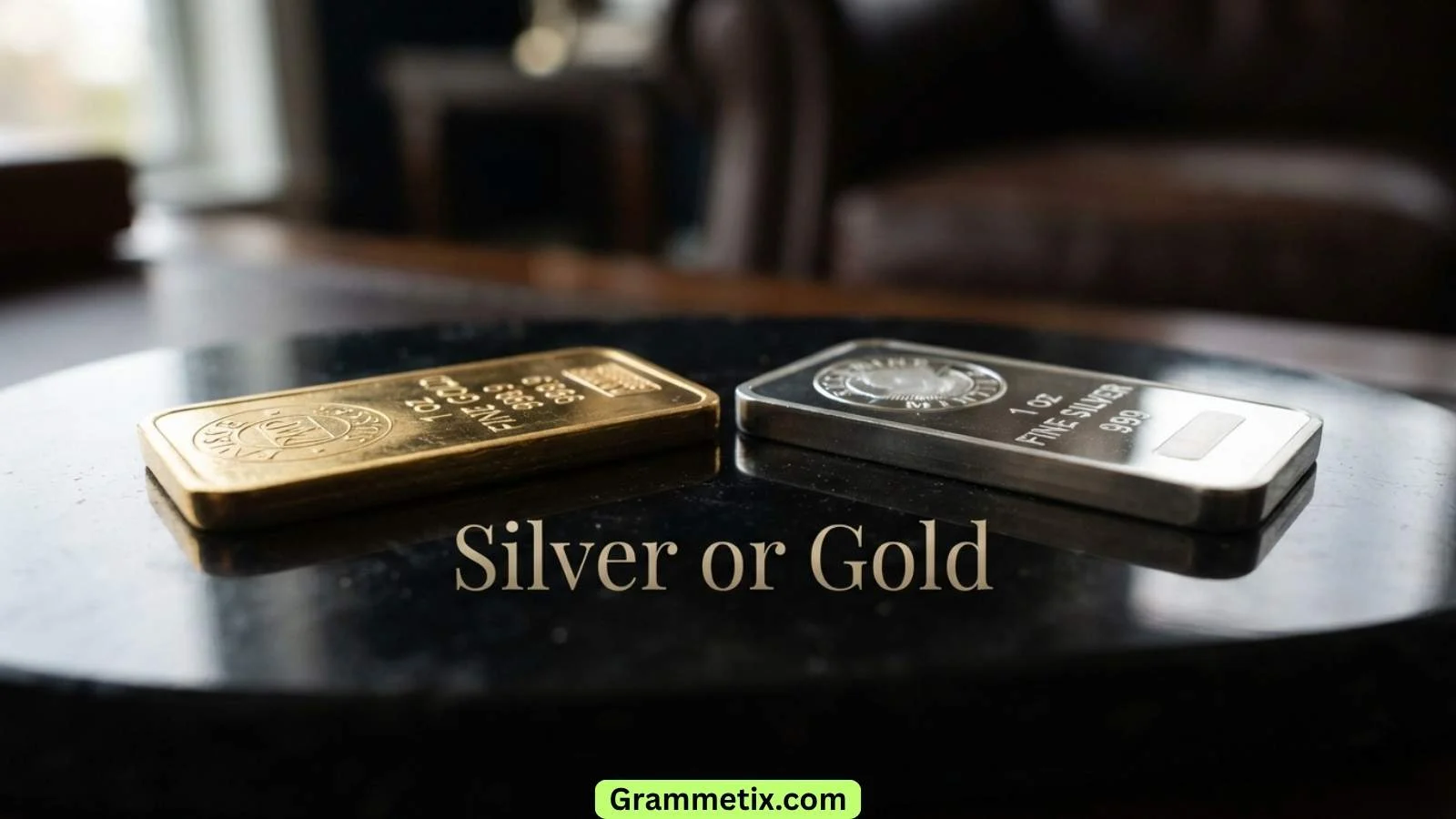
Silver vs gold is a common comparison. Many people want to know which metal is the better choice.
Some are buying jewelry. Others are looking for a smart investment. Many simply like the beauty of both metals but cannot decide which one fits their needs.
The truth is that neither silver nor gold is better for everyone. Each has its own strengths. Silver costs less and looks modern. Gold offers lasting value and timeless beauty.
In this guide, you will learn the key differences, compare their features, discover their pros and cons, and find out which metal is the right choice for your budget, style, and goals.
Silver or Gold — Quick Answer
Both silver and gold are valuable precious metals, but they serve different needs. Silver is more affordable and great for everyday jewelry. Gold is more expensive, lasts longer, and usually holds its value better. The best choice depends on your budget, personal style, and whether you want fashion, durability, or long-term investment.
Silver or Gold at a Glance
The table below shows the biggest differences between silver and gold.
| Feature | Silver | Gold |
|---|---|---|
| Color | Bright white-gray | Warm yellow |
| Average Price | Lower | Higher |
| Durability | Good but softer | Excellent, especially lower karat gold |
| Maintenance | Needs regular cleaning | Requires little maintenance |
| Tarnish | Yes | No |
| Investment Value | Moderate | High |
| Popular Uses | Jewelry, coins, electronics | Jewelry, coins, luxury items |
| Best For | Budget-friendly buyers | Luxury and long-term value |
Quick Summary
- Choose silver if you want an affordable and stylish metal.
- Choose gold if you want lasting value and premium quality.
What Is Silver?
Silver is a naturally occurring precious metal with a bright white shine. People have used it for thousands of years to make jewelry, coins, dishes, and decorative items. Today, silver is also important in electronics because it conducts electricity very well.
Pure silver is soft. Because of this, most jewelry uses sterling silver, which is made of 92.5% silver and 7.5% other metals, usually copper. This mixture makes silver stronger and more durable.
Common Uses of Silver
Silver is found in many everyday products.
It is commonly used for:
- Rings
- Necklaces
- Bracelets
- Earrings
- Watches
- Coins
- Cutlery
- Electronics
- Decorative items
Because silver costs less than gold, it is popular with people who want beautiful jewelry without spending too much.
Advantages of Silver
Silver offers many benefits.
Affordable
Silver costs much less than gold. This makes it easier for most people to buy.
Beautiful Appearance
Its cool white color matches almost every outfit. Many people also like its modern and clean look.
Easy to Match
Silver pairs well with black, blue, gray, and white clothing. It also looks great with gemstones.
Popular Choice
Many fashion brands use sterling silver because customers love its appearance and price.
Disadvantages of Silver
Silver also has a few drawbacks.
Tarnishes Over Time
Silver reacts with sulfur in the air. This creates a dark layer called tarnish. The metal is not damaged, but it needs cleaning.
Needs More Care
To keep its shine, silver should be cleaned and stored properly.
Lower Investment Value
Although silver has value, it usually grows in price more slowly than gold.
Who Should Buy Silver?
Silver is a great choice if you:
- Have a smaller budget
- Love modern jewelry
- Enjoy changing accessories often
- Want beautiful pieces at affordable prices
- Prefer cool-colored metals
For many first-time jewelry buyers, silver offers excellent value.
What Is Gold?
Gold is one of the world’s most famous precious metals. People have admired it for thousands of years because it is rare, beautiful, and valuable. Gold has been used for jewelry, coins, artwork, and even money throughout history.
Unlike silver, gold does not tarnish. It keeps its shine for many years with very little care. This makes it one of the most popular choices for fine jewelry.
Pure gold is known as 24-karat (24K) gold. Since pure gold is soft, jewelers often mix it with other metals to create stronger versions such as 18K, 14K, and 10K gold.
Common Uses of Gold
Gold appears in many valuable products.
It is often used for:
- Wedding rings
- Engagement rings
- Necklaces
- Bracelets
- Luxury watches
- Coins
- Investment bars
- Awards
- High-end decorations
Gold is also used in electronics and medical equipment because it resists corrosion.
Advantages of Gold
Gold has many qualities that make it valuable.
Long-Lasting Beauty
Gold keeps its shine for many years without tarnishing.
Excellent Investment
Many people buy gold to protect their savings because it often holds its value during uncertain economic times.
Luxury Appearance
Its rich yellow color has symbolized wealth and success for centuries.
Strong Resale Value
Gold jewelry and coins usually have higher resale value than silver.
Disadvantages of Gold
Gold also has some downsides.
Higher Cost
Gold is much more expensive than silver.
Can Scratch
Pure 24K gold is soft. Lower-karat gold is stronger, but all gold jewelry can still scratch over time.
Higher Insurance Cost
Expensive gold jewelry may cost more to insure or replace if lost.
Who Should Buy Gold?
Gold is an excellent option if you:
- Want long-lasting jewelry
- Prefer luxury products
- Plan to keep jewelry for many years
- Want a stronger investment
- Like classic styles
Many people choose gold for wedding rings and family heirlooms because it lasts for generations.
Key Differences Between Silver and Gold
Silver and gold may both be precious metals, but they differ in many ways. Understanding these differences can help you make the right choice.
Appearance
Silver has a bright white-gray shine. It gives a clean and modern look.
Gold has a warm yellow color. It looks rich, classic, and luxurious.
Price
Silver is much more affordable than gold. This makes it a popular choice for budget-friendly jewelry.
Gold costs more because it is rarer and has a higher market value.
Durability
Sterling silver is strong enough for daily use, but it can scratch and bend more easily.
Gold jewelry, especially 14K and 18K, is durable and made to last for many years.
Tarnishing
Silver naturally tarnishes over time. Regular cleaning keeps it looking new.
Gold does not tarnish. It keeps its shine with very little maintenance.
Weight
Gold is much heavier than silver. Two rings of the same size will usually feel different in your hand.
Investment Value
Gold has a long history as a safe investment. Many people buy it during uncertain economic times.
Silver also has investment value, but its price changes more and is generally lower.
Maintenance
Silver needs regular polishing to remove tarnish.
Gold only needs occasional cleaning with mild soap and water.
Silver or Gold for Jewelry
Both metals make beautiful jewelry, but the best choice depends on your lifestyle and budget.
Rings
Silver rings are stylish and affordable. They are great for everyday fashion.
Gold rings are more durable and are often chosen for engagement and wedding rings.
Necklaces
Silver necklaces offer a bright and modern appearance.
Gold necklaces have a timeless look that works well for special occasions.
Bracelets
Silver bracelets are perfect for casual wear.
Gold bracelets are often seen as luxury accessories.
Earrings
Both metals work well for earrings.
If you have sensitive skin, choose high-quality sterling silver or solid gold.
Wedding Jewelry
Gold remains the most popular choice for wedding bands because it lasts for decades.
Silver wedding bands are less expensive but need more care over time.
Best Choice: Gold is usually better for lifelong jewelry, while silver is ideal for fashion and everyday style.
Silver or Gold for Investment
Many people buy precious metals to protect their money.
Gold as an Investment
Gold has been trusted for centuries.
Benefits include:
- Strong long-term value
- Global demand
- Easy to buy and sell
- Better protection against inflation
Gold is often called a “safe-haven” asset because investors turn to it during uncertain times.
Silver as an Investment
Silver is also valuable but behaves differently.
Benefits include:
- Lower starting cost
- Higher growth potential during some market cycles
- Strong industrial demand
- Easy for beginners to start collecting
However, silver prices usually change more than gold prices.
Which Investment Is Better?
If your goal is stability, gold is usually the better choice.
If you have a smaller budget and want to start investing, silver can be an excellent first step.
Many experienced investors own both metals to create a balanced portfolio.
Silver or Gold for Everyday Wear
Comfort and maintenance matter if you wear jewelry every day.
Comfort
Silver jewelry is lightweight and comfortable.
Gold jewelry feels heavier, especially larger pieces.
Daily Durability
Gold is generally better for daily wear because it resists tarnishing.
Sterling silver can also last for years, but it needs regular care.
Cleaning
Silver should be polished when tarnish appears.
Gold usually needs only gentle washing with warm water and mild soap.
Skin Sensitivity
Most people can wear sterling silver without problems.
Solid gold is also an excellent choice for sensitive skin, especially 14K or 18K gold.
Overall Recommendation
For daily use, gold offers greater convenience because it requires less maintenance.
Silver remains an excellent choice if you don’t mind occasional cleaning.
Pros and Cons of Silver
Every metal has strengths and weaknesses.
Pros
- More affordable than gold
- Beautiful bright shine
- Easy to match with many outfits
- Widely available
- Great for fashion jewelry
- Excellent choice for beginners
Cons
- Tarnishes over time
- Needs regular polishing
- Lower resale value
- Softer than many gold alloys
- Can scratch more easily
Pros and Cons of Gold
Gold is one of the world’s most valuable metals, but it also has disadvantages.
Pros
- Does not tarnish
- Long-lasting beauty
- Excellent resale value
- Trusted investment
- Perfect for heirloom jewelry
- Requires very little maintenance
Cons
- Higher purchase price
- Pure gold scratches easily
- More expensive to replace if lost
- Luxury pieces may require insurance
Quick Comparison: Pros and Cons
| Feature | Silver | Gold |
|---|---|---|
| Budget Friendly | ✅ Excellent | ❌ Expensive |
| Luxury Feel | Good | Excellent |
| Long-Term Durability | Good | Excellent |
| Maintenance | Higher | Lower |
| Resale Value | Moderate | High |
| Investment Potential | Good | Excellent |
Both metals are excellent choices. The better option depends on what matters most to you. If you want affordability and modern style, silver is hard to beat. If you want lasting value, durability, and timeless elegance, gold is the stronger choice.
Which One Should You Choose?
The right choice depends on your budget, lifestyle, and personal taste. Neither metal is better for everyone. Think about how you plan to use it before making your decision.
Choose Silver If…
Silver is the better option if you:
- Want beautiful jewelry at a lower price.
- Prefer a bright, modern look.
- Like changing your accessories often.
- Are buying your first piece of precious metal jewelry.
- Don’t mind cleaning your jewelry occasionally.
Silver offers excellent value and is perfect for everyday fashion.
Choose Gold If…
Gold is the better choice if you:
- Want jewelry that lasts for decades.
- Prefer a classic and luxurious style.
- Are buying an engagement or wedding ring.
- Want a precious metal with strong resale value.
- Need an investment that can hold its value over time.
Gold costs more, but many people see it as a long-term investment.
Common Myths About Silver and Gold
Many people believe things about silver and gold that are not true. Let’s clear up a few common myths.
1: Gold Never Scratches
This is false.
Pure gold is actually a soft metal. Gold jewelry can scratch with regular wear, although lower-karat gold is stronger.
2: Silver Is Cheap and Low Quality
Not true.
Sterling silver is a genuine precious metal. High-quality silver jewelry can last for many years with proper care.
3: Gold Is Always the Better Choice
This depends on your needs.
Gold is great for luxury and investment, but silver may be the smarter choice if you’re shopping on a budget.
4: Silver Has No Investment Value
False.
Silver is traded worldwide and is used in many industries. While it is generally worth less than gold, it can still be a valuable investment.
5: You Can’t Wear Silver and Gold Together
You certainly can.
Mixing silver and gold jewelry has become a popular fashion trend. Many people enjoy combining both metals for a stylish look.
FAQs
Is silver better than gold?
Neither metal is better in every situation. Silver is more affordable, while gold offers greater durability and long-term value.
Does silver tarnish?
Yes. Sterling silver naturally tarnishes when exposed to air and moisture. Regular cleaning keeps it looking bright and shiny.
Why is gold more expensive than silver?
Gold is rarer and has been highly valued for centuries. Its limited supply and strong demand make it more expensive.
Which metal lasts longer?
Gold generally lasts longer because it does not tarnish and needs less maintenance. Both metals can last for many years with proper care.
Which is better for sensitive skin?
High-quality sterling silver and solid gold are both good choices. People with metal allergies may prefer higher-karat gold.
Can I wear silver and gold together?
Yes. Mixing both metals is completely acceptable. Many jewelry designers create pieces that combine silver and gold beautifully.
Which metal is better for an engagement ring?
Gold is the more popular choice because it is durable, valuable, and available in different colors such as yellow, white, and rose gold.
Conclusion
Silver and gold are both excellent precious metals, but they serve different purposes. Silver is affordable, stylish, and ideal for everyday jewelry. Gold is more expensive, yet it offers lasting beauty, greater durability, and stronger investment value.
The best choice depends on what matters most to you. If you’re shopping on a budget or enjoy modern fashion, silver is an excellent option. If you want timeless elegance or a long-term investment, gold is hard to beat.
By understanding their differences, you can confidently choose the metal that best fits your lifestyle and goals.