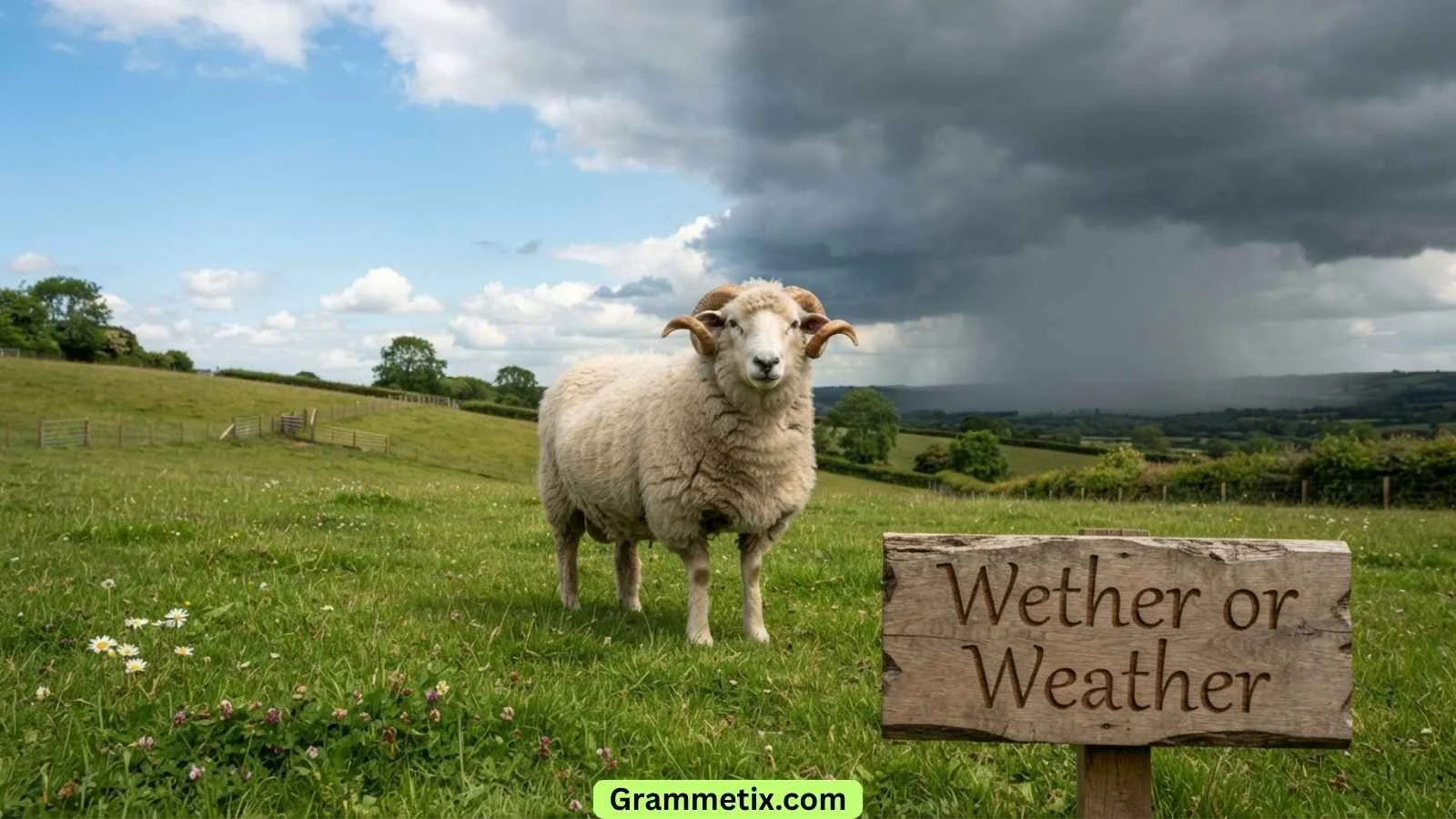
Wether or weather is a common spelling question that confuses many English learners. These two words look almost the same, but they have very different meanings.
Many people search for this keyword because they want to know which spelling is correct in everyday writing. The confusion often happens because both words sound alike.
In this guide, you will learn the meaning of each word, how to use them correctly, their history, pronunciation, and simple tricks to remember the difference.
By the end, choosing the right spelling will become easy.
Wether or Weather – Quick Answer
Weather is the correct word when talking about rain, sun, wind, or climate. Wether is also a correct word, but it means a castrated male sheep. Most people need weather in daily writing, while wether is mainly used in farming.
Key Difference Between Wether or Weather
- Weather means the condition of the atmosphere.
- Wether means a castrated male sheep.
- Weather is common in daily English.
- Wether is rarely used outside farming.
| Wether | Weather |
|---|---|
| A castrated male sheep | Rain, sun, wind, snow, or climate |
| Farming term | Everyday English word |
| Rarely used | Used very often |
| Noun | Noun and part of common expressions |
Is Wether or Weather Correct or Incorrect?
Both wether and weather are correct English words. They are not different spellings of the same word. Instead, they have different meanings.
Use weather when talking about the sky or climate.
Example: The weather is sunny today.
Use wether only when talking about a male sheep that has been castrated.
Example: The farmer sold a healthy wether.
So, the correct spelling depends on what you want to say.
Why Do People Confuse Wether or Weather?
Many people confuse these words because they sound exactly the same.
Another reason is that weather appears almost every day. People read it in weather reports, news, and apps.
The word wether is very uncommon. Most students never see it in school books.
Global internet use also increases confusion. Many people quickly type words without checking the meaning.
Education differences can also play a role. Some learners never study farming terms, so they assume wether is simply a misspelling.
The Origin of Wether or Weather
The word weather comes from Old English weder, meaning air, sky, or storm. Over many centuries, it kept its meaning about the atmosphere.
The word wether also comes from Old English. It originally referred to a male sheep. Farmers have used this word for hundreds of years.
Although both words have old roots and similar spelling, they developed different meanings.
British English vs American English Spelling
Unlike words such as colour and color, there is no British or American spelling difference here.
Both countries use weather for climate.
Both countries use wether for the sheep.
| Country | Climate Word | Sheep Word |
|---|---|---|
| United States | Weather | Wether |
| United Kingdom | Weather | Wether |
| Canada | Weather | Wether |
| Australia | Weather | Wether |
| New Zealand | Weather | Wether |
Examples
- The weather will be cold tomorrow.
- The wether stayed with the flock.
Which Spelling Should You Use?
For US Audience
Use weather when talking about rain, snow, sunshine, or storms. Use wether only in farming or animal care.
For UK/Commonwealth Audience
The same rule applies. Weather is used for climate. Wether refers to a male sheep.
For Global/SEO Writing
Always use weather when writing about forecasts, seasons, temperature, or climate. Search engines expect this spelling for weather-related topics. Use wether only if your article is about sheep or farming.
How to Pronounce Wether or Weather
Wether: WETH-er
Weather: WETH-er
Both words are pronounced the same. They are homophones, meaning they sound alike but have different meanings and spellings.
Formal vs Informal Usage of Wether or Weather
Academic Writing
Use weather in science, geography, and climate studies. Use wether only in agriculture or animal science.
Business Communication
Businesses usually use weather when discussing travel, shipping, or outdoor events.
Example:
“The meeting was delayed because of bad weather.”
Casual Conversation
Almost everyone uses weather in daily speech.
Example:
“The weather feels great today.”
Most people never use wether in casual conversations.
Common Mistakes with Wether or Weather
1: Using “wether” for climate
Incorrect: The wether is sunny today.
Correct: The weather is sunny today.
Explanation: Use weather for the atmosphere.
2: Thinking “wether” is a spelling mistake
Incorrect: Wether is not a real word.
Correct: Wether is a real English word for a male sheep.
Explanation: It is uncommon but completely correct.
3: Using “weather” for sheep
Incorrect: The farmer bought three weather.
Correct: The farmer bought three wether sheep.
Explanation: Use wether when referring to the animal.
Wether or Weather in Everyday Examples
In Emails
“The weather may delay our delivery.”
In News
“Weather experts expect heavy rain this weekend.”
In Social Media
“Perfect weather for a beach day!”
In Formal Writing
“Weather conditions affected crop production this year.”
Simple Rule to Remember
- Weather = sky and climate.
- Wether = male sheep.
- If you mean rain or sunshine, always choose weather.
A simple memory trick:
Weather has “ea” like “earth and air.”
Wether or Weather – Google Trends & Usage Data
The word weather is searched millions of times every month around the world. It is one of the most common English words.
The word wether receives very few searches. Most searches happen because people wonder if it is a misspelling.
Weather is commonly used in:
- United States
- United Kingdom
- Canada
- Australia
- India
Wether mostly appears in farming books, agriculture websites, and livestock guides.
Related Grammar Terms You Should Know
You may also like these related topics:
- Whether or Weather
- Then or Than
- Their, There, or They’re
- Affect or Effect
- Advice or Advise
These topics can help improve your English writing.
FAQs
Is wether a real English word?
Yes. Wether is a real English word. It means a castrated male sheep and is mostly used in farming.
Is weather the correct spelling for rain and sunshine?
Yes. Weather is always correct when talking about rain, snow, wind, temperature, or climate. This is the word most people use every day.
Do wether and weather sound the same?
Yes. They have the same pronunciation. They are homophones with different meanings and spellings.
Is wether used in American English?
Yes. American English uses wether with the same meaning as British English. However, it is rarely used outside farming.
Which word should students normally use?
Students almost always need weather because it appears in school subjects, daily conversations, and news reports. Wether is only needed for animal or farming topics.
Can I use weather instead of wether?
No. They have different meanings. Using the wrong word changes the meaning of your sentence.
Conclusion
The difference between wether and weather is simple once you know their meanings. Weather refers to the atmosphere, including rain, sunshine, wind, and snow. It is the word most people use every day.
Wether is a correct English word too, but it means a castrated male sheep and is mainly used in farming. Both words sound the same, which causes confusion.
Remember this easy rule: if you are talking about the sky, seasons, or climate, always choose weather. Use wether only when discussing sheep. Following this simple rule will help you write with confidence and avoid common spelling mistakes.