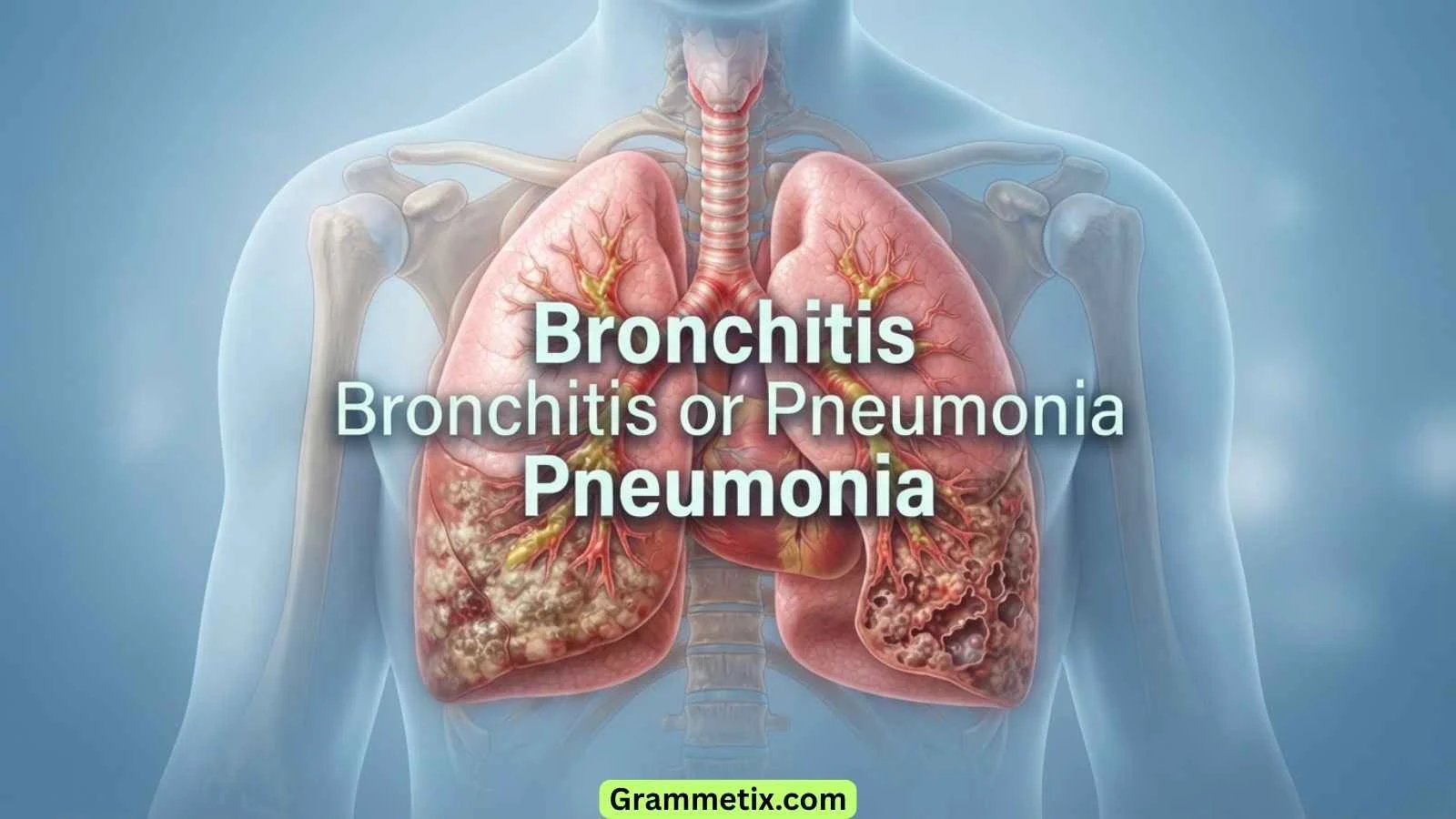
Bronchitis or pneumonia is a common search because both illnesses affect your lungs and can cause coughing.
Many people wonder if they are the same disease or how to tell them apart. While they share some symptoms, they are very different health conditions. Knowing the difference can help you get the right care at the right time.
In this guide, you will learn what bronchitis and pneumonia are, how their symptoms differ, what causes them, and when you should see a doctor.
Everything is explained in simple English to make it easy for everyone to understand.
Bronchitis or Pneumonia – Quick Answer
Bronchitis is swelling of the bronchial tubes that carry air to your lungs. Pneumonia is an infection that fills the tiny air sacs in your lungs with fluid or pus. Bronchitis is often milder and usually gets better on its own. Pneumonia is more serious and may need antibiotics or hospital care.
Key Difference Between Bronchitis and Pneumonia
The biggest difference is where the illness affects your breathing system.
- Bronchitis affects the bronchial tubes.
- Pneumonia affects the air sacs inside the lungs.
- Bronchitis is usually less severe.
- Pneumonia can become serious without treatment.
- Pneumonia often causes a high fever and breathing problems.
Bronchitis vs Pneumonia Comparison
| Feature | Bronchitis | Pneumonia |
|---|---|---|
| Affects | Bronchial tubes | Air sacs in the lungs |
| Main Cause | Usually viruses | Viruses, bacteria, or fungi |
| Cough | Common, often with mucus | Common, often with thick mucus |
| Fever | Mild or none | Often high |
| Breathing | Mild shortness of breath | Shortness of breath can be severe |
| Chest X-ray | Usually normal | Shows lung infection |
| Severity | Usually mild | Can be serious |
| Recovery | Around 1–3 weeks | Several weeks or longer |
What Is Bronchitis?
Bronchitis happens when the tubes that carry air to your lungs become swollen. These tubes are called bronchial tubes. The swelling makes it harder for air to move in and out.
Most cases of bronchitis are caused by viruses, such as the viruses that cause the common cold or flu. Because of this, antibiotics usually do not help.
There are two main types of bronchitis.
Acute Bronchitis
Acute bronchitis starts suddenly and usually lasts for a few weeks. It often develops after a cold or flu.
Common symptoms include:
- A cough that lasts several days or weeks
- Clear, white, yellow, or green mucus
- Mild fever
- Sore throat
- Tiredness
- Chest discomfort
- Mild wheezing
Most people recover with rest, fluids, and home care.
Chronic Bronchitis
Chronic bronchitis is a long-term condition. It causes coughing with mucus for at least three months each year for two years in a row.
Smoking is the most common cause of chronic bronchitis.
People with chronic bronchitis may have:
- Daily cough
- Thick mucus
- Frequent chest infections
- Trouble breathing during activity
Chronic bronchitis is one form of chronic obstructive pulmonary disease (COPD).
What Is Pneumonia?
Pneumonia is an infection inside the lungs. It affects the tiny air sacs called alveoli. These air sacs normally fill with air when you breathe.
When you have pneumonia, the air sacs fill with fluid or pus instead. This makes it harder for oxygen to reach your body.
Pneumonia can be caused by:
- Bacteria
- Viruses
- Fungi
Anyone can get pneumonia, but it is more dangerous for:
- Babies
- Older adults
- People with weak immune systems
- People with long-term health problems
Some people recover at home, while others need treatment in a hospital.
Bronchitis or Pneumonia Symptoms
At first, bronchitis and pneumonia may seem alike. Both can cause coughing and tiredness. However, pneumonia usually causes stronger symptoms.
Symptoms of Bronchitis
People with bronchitis often have:
- A cough that may last several weeks
- Mucus that is clear, white, yellow, or green
- Mild chest discomfort
- Mild fever or no fever
- Sore throat
- Runny nose
- Wheezing
- Feeling tired
The cough is usually the symptom that lasts the longest.
Symptoms of Pneumonia
People with pneumonia may have:
- High fever
- Chills
- Severe cough with mucus
- Chest pain when breathing or coughing
- Fast breathing
- Shortness of breath
- Heavy sweating
- Extreme tiredness
- Confusion, especially in older adults
Pneumonia symptoms often become worse faster than bronchitis symptoms.
Symptoms That Both Conditions Share
Some symptoms appear in both illnesses, including:
- Cough
- Mucus
- Tiredness
- Mild chest discomfort
- Difficulty breathing
Because these symptoms overlap, it is not always easy to know which illness you have without seeing a healthcare provider.
Warning Signs That May Point to Pneumonia
While only a doctor can diagnose pneumonia, these signs often suggest it may be more serious than bronchitis:
- A fever higher than 102°F (38.9°C)
- Fast or difficult breathing
- Chest pain with each breath
- Lips or fingertips turning blue
- Feeling confused
- Symptoms that suddenly become much worse
These signs should not be ignored. Medical care may be needed right away.
Can Bronchitis Feel Like Pneumonia?
Yes. In the early stages, the two illnesses can feel very similar. Both may begin with a cough, tiredness, and mild fever.
The main difference is that bronchitis usually stays in the airways, while pneumonia spreads into the lung tissue. As pneumonia develops, symptoms often become more severe, especially breathing problems and high fever.
Key Takeaway
Bronchitis mainly affects the bronchial tubes, while pneumonia affects the lungs themselves. Bronchitis is usually mild and improves with rest. Pneumonia is more serious and often needs medical treatment. Knowing the symptoms can help you recognize when it is time to see a doctor.
Causes of Bronchitis or Pneumonia
Although bronchitis and pneumonia affect the lungs, they do not always have the same cause. Knowing what causes each illness can help you lower your risk.
Causes of Bronchitis
Acute bronchitis is most often caused by viruses. The same viruses that cause colds and the flu can also cause bronchitis.
Common causes include:
- Cold viruses
- Influenza (flu) viruses
- Respiratory syncytial virus (RSV)
- COVID-19 virus
- Breathing in smoke or polluted air
- Dust and chemical fumes
Sometimes, bacteria can cause bronchitis, but this is much less common.
Causes of Pneumonia
Pneumonia has more possible causes than bronchitis.
These include:
- Bacteria
- Viruses
- Fungi
Bacterial pneumonia is often more serious and usually needs antibiotics. Viral pneumonia may improve with rest, but some people still need medical care.
Fungal pneumonia is less common. It mainly affects people with weak immune systems.
Risk Factors
Anyone can develop bronchitis or pneumonia, but some people have a higher risk.
Risk Factors for Bronchitis
You may be more likely to get bronchitis if you:
- Smoke or vape
- Spend time around secondhand smoke
- Have asthma
- Have allergies
- Work around dust or chemicals
- Have a weak immune system
Risk Factors for Pneumonia
Your risk of pneumonia is higher if you:
- Are younger than 2 years old
- Are 65 years or older
- Smoke
- Have diabetes
- Have heart disease
- Have lung diseases like COPD or asthma
- Have a weak immune system
- Recently had the flu or another respiratory infection
The more risk factors you have, the greater your chance of developing pneumonia.
How Doctors Diagnose Bronchitis or Pneumonia
A doctor can often tell the difference by asking about your symptoms and examining you.
They may:
- Listen to your lungs with a stethoscope.
- Check your temperature.
- Measure your oxygen level.
- Ask how long you have been sick.
If pneumonia is suspected, more tests may be needed.
Common Tests
| Test | Why It Is Done |
|---|---|
| Physical exam | Checks breathing and lung sounds |
| Chest X-ray | Looks for infection in the lungs |
| Pulse oximeter | Measures oxygen levels |
| Blood test | Checks for infection |
| Sputum test | Finds the cause of infection in mucus |
A chest X-ray is one of the best ways to confirm pneumonia. Acute bronchitis usually does not show signs of infection on an X-ray.
Treatment Options
Treatment depends on which illness you have and what caused it.
Treating Bronchitis
Most cases of acute bronchitis improve without antibiotics.
Your doctor may recommend:
- Plenty of rest
- Drinking lots of water
- Warm tea or soup
- Using a humidifier
- Over-the-counter pain or fever medicine
- Cough medicine, if appropriate
If bacteria cause bronchitis, antibiotics may be prescribed, but this is uncommon.
People with chronic bronchitis may also need:
- Inhalers
- Breathing exercises
- Medicines to open the airways
- A plan to quit smoking
Treating Pneumonia
Pneumonia treatment depends on the cause and how severe it is.
Treatment may include:
- Antibiotics for bacterial pneumonia
- Antiviral medicine for some viral infections
- Antifungal medicine for fungal pneumonia
- Fever-reducing medicine
- Drinking plenty of fluids
- Rest
Some people may need:
- Oxygen therapy
- IV fluids
- Hospital care
Most healthy adults recover well with proper treatment, but recovery may take several weeks.
Can Bronchitis Turn Into Pneumonia?
Yes, it can happen, but it is not common.
Sometimes, a person with viral bronchitis develops a bacterial lung infection. When this happens, pneumonia may develop.
Watch for symptoms that become worse instead of better, such as:
- High fever
- Severe shortness of breath
- Chest pain
- Confusion
- A cough that suddenly becomes much worse
If these symptoms appear, contact a healthcare provider as soon as possible.
When Should You See a Doctor?
Many cases of bronchitis improve at home. However, some symptoms should never be ignored.
See a doctor if you have:
- A cough lasting more than three weeks
- Trouble breathing
- Chest pain
- A fever that does not improve
- Blood in your mucus
- Symptoms that keep getting worse
Seek Emergency Care If You Have:
- Severe trouble breathing
- Blue lips or fingertips
- Confusion
- Very high fever with shaking chills
- Severe chest pain
Quick treatment can prevent serious problems.
Bronchitis or Pneumonia: Quick Comparison
| Feature | Bronchitis | Pneumonia |
|---|---|---|
| Where it occurs | Bronchial tubes | Air sacs in the lungs |
| Common cause | Mostly viruses | Bacteria, viruses, or fungi |
| Fever | Mild or none | Often high |
| Chest pain | Usually mild | Often noticeable |
| Shortness of breath | Mild | Can be severe |
| Chest X-ray | Usually normal | Shows infection |
| Antibiotics | Rarely needed | Often needed for bacterial cases |
| Hospital stay | Usually not needed | Sometimes required |
| Recovery time | 1–3 weeks | Several weeks |
Simple Rule to Remember
Remember these easy tips:
- Bronchitis = Breathing tubes.
- Pneumonia = Lung air sacs.
- High fever and serious breathing problems often point to pneumonia.
If symptoms become severe, always seek medical advice instead of guessing.
FAQs
1. Which is more serious, bronchitis or pneumonia?
Pneumonia is usually more serious. It affects the lungs directly and can become life-threatening without proper treatment, especially in older adults and people with weak immune systems.
2. Can bronchitis become pneumonia?
Yes. Although most cases do not, bronchitis can sometimes lead to pneumonia if another infection develops in the lungs.
3. How can I tell if I have bronchitis or pneumonia?
Both illnesses cause coughing, but pneumonia often causes high fever, chest pain, and severe breathing problems. A doctor may need a chest X-ray to confirm the diagnosis.
4. Does bronchitis always need antibiotics?
No. Most cases of acute bronchitis are caused by viruses, so antibiotics usually do not help. They are only used when a bacterial infection is present.
5. How long does recovery take?
Acute bronchitis usually improves within one to three weeks, although the cough may last longer. Pneumonia often takes several weeks to heal completely.
6. Can I prevent bronchitis and pneumonia?
Yes. Wash your hands often, avoid smoking, stay away from sick people, and keep up with recommended vaccines, such as the flu and pneumonia vaccines if advised by your healthcare provider.
Conclusion
Bronchitis and pneumonia may seem similar, but they are different illnesses. Bronchitis affects the breathing tubes and is usually caused by viruses. Pneumonia affects the air sacs inside the lungs and is often more serious.
While both can cause coughing and tiredness, pneumonia is more likely to cause a high fever, chest pain, and difficulty breathing. If your symptoms are severe or get worse instead of better, see a healthcare provider promptly.
Understanding the differences can help you get the right treatment sooner and recover safely.