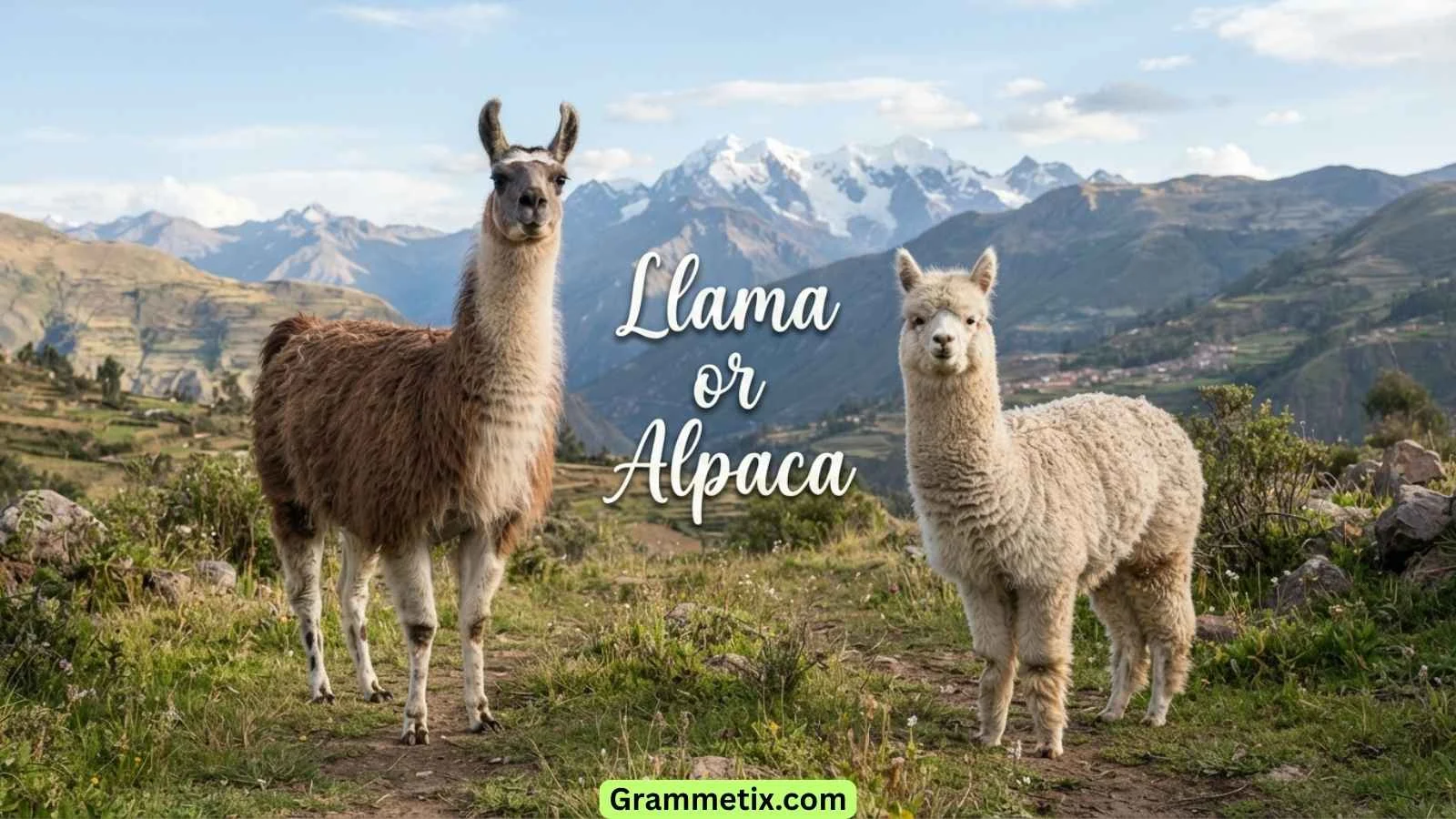
Llama or alpaca is one of the most common animal comparison searches online. At first glance, these two fluffy animals look almost identical.
Many people think they are the same species. Others wonder which one has softer wool, makes a better pet, or is easier to care for. The truth is that llamas and alpacas are different animals with unique features and purposes.
Knowing the differences can help you identify them, choose the right one for your farm, or simply learn more about these fascinating South American camelids.
In this guide, you’ll discover their key differences, similarities, uses, personalities, and much more in simple, easy-to-understand language.
Llama or Alpaca – Quick Answer
A llama is larger, stronger, and mainly used as a pack or guard animal. An alpaca is smaller, gentler, and raised for its soft, high-quality fleece. The easiest way to tell them apart is by their size, ears, face shape, and wool.
Key Differences Between Llamas and Alpacas
Here are the biggest differences at a glance.
- Llamas are much larger than alpacas.
- Alpacas produce softer and finer fleece.
- Llamas have long, banana-shaped ears.
- Alpacas have short, spear-shaped ears.
- Llamas often guard livestock or carry loads.
- Alpacas are mainly raised for luxury fiber.
Llama vs Alpaca Comparison Table
| Feature | Llama | Alpaca |
|---|---|---|
| Scientific Name | Lama glama | Vicugna pacos |
| Height | 5.5–6 feet | 4.5–5 feet |
| Weight | 250–450 pounds | 100–200 pounds |
| Main Purpose | Pack animal, livestock guardian | Fiber production |
| Face | Long and narrow | Short, rounded, and fluffy |
| Ears | Long and curved | Short and pointed |
| Fiber | Coarse | Soft and luxurious |
| Personality | Bold and confident | Calm and shy |
| Best For | Farms, hiking, guarding | Wool and small farms |
Expert Tip: If you only have a few seconds to identify one, look at the ears first. Long curved ears usually mean a llama, while short pointed ears almost always mean an alpaca.
Appearance
Although llamas and alpacas belong to the same camelid family, they have very different looks once you know what to watch for.
Llamas are tall and lean. Their long necks and narrow faces make them appear elegant. Their ears curve inward like bananas, making them one of the easiest features to recognize.
Alpacas are shorter and fluffier. Their faces are covered with soft fleece, giving them a round, teddy bear-like appearance. Their ears are shorter and stand straight up.
How to Tell a Llama from an Alpaca at a Glance
If you visit a farm or zoo, use this simple checklist.
- Look at the ears. Long curved ears belong to a llama.
- Look at the face. A fluffy round face usually belongs to an alpaca.
- Look at the body. Llamas are taller and slimmer.
- Look at the fleece. Alpacas have thicker, softer wool.
- Look at the size. Llamas stand noticeably higher than alpacas.
These simple clues help most people identify them within seconds.
Size and Weight
Size is one of the biggest differences between these two animals.
Adult llamas usually stand between 5½ and 6 feet tall at the top of their heads. They typically weigh 250 to 450 pounds.
Adult alpacas are much smaller. Most stand around 4½ to 5 feet tall and weigh 100 to 200 pounds.
Because llamas are larger and stronger, they can carry equipment during long walks or mountain trips. Healthy adult llamas can carry about 25–30% of their body weight, making them excellent pack animals.
Alpacas are not built for carrying heavy loads. Their smaller frames make them better suited for producing fine fleece rather than doing physical work.
Personality and Behavior
Both animals are intelligent and social, but their personalities are quite different.
Llamas
Llamas are confident and curious. They enjoy watching their surroundings and often act as protectors. Many farmers use them to guard sheep, goats, and even alpacas from predators like foxes or coyotes.
A well-trained llama often enjoys interacting with people. They quickly learn routines and usually adapt well to new environments.
Alpacas
Alpacas are quieter and more reserved. They feel happiest when living in a herd because they are naturally social animals.
Instead of approaching people, alpacas usually stay close to other alpacas. Their calm nature makes them peaceful additions to many farms.
How They Communicate
Both llamas and alpacas make soft humming sounds. These hums help them communicate with each other.
They also use body language. Ear position, tail movement, and posture can show whether they are relaxed, curious, or uncomfortable.
Many people believe these animals constantly spit at humans. In reality, they usually spit at each other during arguments over food or personal space. They rarely spit at people unless they feel threatened or have been handled poorly.
Wool and Fiber Quality
One of the biggest reasons people raise alpacas is their beautiful fleece.
Alpaca fiber is famous around the world because it is:
- Soft
- Warm
- Lightweight
- Strong
- Naturally water-resistant
- Low in lanolin, making it suitable for many people with wool sensitivities
Luxury clothing companies use alpaca fleece to make:
- Sweaters
- Scarves
- Hats
- Socks
- Blankets
- Gloves
- Ponchos
Llama fiber is different.
It is generally thicker and coarser. While it is still useful, it is more commonly used for rugs, ropes, outerwear, and other durable products.
Fiber Comparison
| Feature | Llama Fiber | Alpaca Fiber |
|---|---|---|
| Softness | Medium | Excellent |
| Warmth | Very Good | Excellent |
| Weight | Moderate | Lightweight |
| Luxury Clothing | Sometimes | Very Common |
| Rug Making | Excellent | Good |
Did You Know? Alpaca fleece naturally comes in more than 20 beautiful colors, including white, black, brown, gray, and several shades in between. This means many products can be made without using artificial dyes.
Habitat and Origin
Llamas and alpacas both come from the Andes Mountains of South America. They have lived alongside people for thousands of years and remain an important part of farming communities today.
Their native range includes:
- Peru
- Bolivia
- Chile
- Ecuador
These regions have cool nights, sunny days, and high mountain landscapes. Both animals developed thick coats that help them stay warm in changing weather.
Although they share the same homeland, their ancestors are different.
- Llamas were domesticated from the guanaco, a wild camelid that still lives in South America.
- Alpacas were domesticated mainly from the vicuña, a smaller wild camelid known for producing some of the world’s finest natural fiber.
Today, llamas and alpacas are raised across North America, Europe, Australia, and New Zealand. Farmers value them for their gentle nature, efficient grazing habits, and useful fiber.
Countries Where They Are Most Common
| Country | Llamas | Alpacas |
|---|---|---|
| Peru | ✔ Very Common | ✔ Very Common |
| Bolivia | ✔ Common | ✔ Common |
| Chile | ✔ Common | ✔ Common |
| United States | ✔ Farmed | ✔ Farmed |
| Canada | ✔ Farmed | ✔ Farmed |
| Australia | Limited | ✔ Large Alpaca Industry |
| New Zealand | Limited | ✔ Popular |
Both animals adapt well to different climates when given proper shelter, clean water, and good nutrition.
Diet and Nutrition
Llamas and alpacas are herbivores. This means they eat plants instead of meat. Their digestive system is very efficient, so they need less food than many animals of the same size.
A healthy diet usually includes:
- Fresh grass
- Good-quality hay
- Clean drinking water
- Mineral supplements when needed
During winter or dry seasons, farmers may provide extra feed to help them stay healthy.
Both animals enjoy grazing in open fields. Rotating pastures also helps keep the grass healthy and reduces parasites.
Expert Tip: Fresh water should always be available. Clean water is just as important as good food for keeping camelids healthy.
Lifespan
With proper care, both llamas and alpacas can live for many years.
- Llamas usually live 15–20 years.
- Alpacas also live 15–20 years.
Some well-cared-for animals may even live a little longer.
Regular health checks, clean shelters, and a balanced diet all help increase their lifespan.
Care and Grooming
Both animals are fairly easy to care for, but they still need regular attention.
Daily care includes:
- Fresh food and water
- A clean shelter
- Safe fencing
- Time with other camelids
Their fleece should be sheared once a year, usually in spring. Shearing keeps them cool during warm weather and helps produce healthy new fiber.
Their toenails may also need trimming several times each year. Teeth should be checked regularly by a veterinarian.
Care Comparison
| Care Need | Llama | Alpaca |
|---|---|---|
| Annual Shearing | Yes | Yes |
| Nail Trimming | Yes | Yes |
| Shelter Needed | Yes | Yes |
| Social Companion | Recommended | Very Important |
| Grooming Difficulty | Easy | Easy |
Common Health Needs
Healthy llamas and alpacas need regular veterinary care.
Common health checks include:
- Vaccinations
- Parasite control
- Dental exams
- Weight monitoring
- Foot care
A clean pasture and dry shelter help prevent many common health problems.
Because both animals often hide signs of illness, owners should watch for changes in eating, walking, or behavior.
Uses of Llamas or Alpacas
Although they are closely related, people raise them for different reasons.
Llamas
Llamas are strong working animals.
People use them for:
- Carrying packs on hiking trips
- Guarding sheep and goats
- Pulling small carts
- Farm work
- Educational farms and petting zoos
Their calm but confident personality makes them excellent livestock guardians.
Alpacas
Alpacas are famous for their valuable fleece.
Their soft fiber is used to make:
- Sweaters
- Scarves
- Hats
- Gloves
- Blankets
- Socks
- Luxury clothing
Many alpaca farms earn income by selling fleece, yarn, and handmade products.
Can Llamas and Alpacas Live Together?
Yes. Llamas and alpacas often live together without problems.
Many farmers keep both species on the same farm. Since they eat similar foods and enjoy living in groups, they usually get along well.
However, each animal still needs enough space, food, and shelter.
Some farmers even keep one llama with a group of alpacas because the llama may help protect the herd.
Can Llamas and Alpacas Breed?
Yes, they can.
A baby born from a llama and an alpaca is called a huarizo.
Huarizos are uncommon because most breeders prefer to keep each species separate. They can inherit features from both parents, such as body size, ears, and fleece.
While these hybrids exist, they are not as common as purebred llamas or alpacas.
Cost of Owning a Llama or Alpaca
The cost depends on age, breeding quality, training, and location.
In general:
- Pet-quality alpacas often cost less than breeding animals.
- Trained llamas usually cost more because they can work as pack or guard animals.
Besides the purchase price, owners should also budget for:
- Food
- Shelter
- Veterinary care
- Annual shearing
- Fencing
- Insurance, if needed
Owning either animal is a long-term commitment.
Which Animal Makes the Better Pet?
Both animals can become friendly with good care, but they suit different owners.
Choose a Llama If You Want:
- A larger animal
- More interaction with people
- A hiking companion
- A livestock guardian
- A working farm animal
Choose an Alpaca If You Want:
- Soft luxury fleece
- A smaller animal
- A peaceful herd
- A quieter farm
- Fiber production
Neither species likes living alone. They are happiest when they have companions.
Which One Should You Choose?
The best choice depends on your goals.
Decision Guide
| If You Want… | Best Choice |
|---|---|
| Soft fleece | Alpaca |
| Luxury fiber | Alpaca |
| Carry equipment | Llama |
| Guard livestock | Llama |
| Smaller animal | Alpaca |
| Taller animal | Llama |
| Farm companion | Either |
| Hiking partner | Llama |
| Fiber business | Alpaca |
| Working animal | Llama |
If your goal is producing premium fleece, an alpaca is the better choice.
If you need a hardworking animal for guarding or packing, choose a llama.
Common Myths About Llamas or Alpacas
Many people believe things that are not true.
1: They Are the Same Animal
They are different species. They belong to the camelid family but have different sizes, personalities, and purposes.
2: They Spit at Everyone
Both animals can spit, but they mostly spit at each other during disagreements. Calm, well-handled animals rarely spit at people.
3: Alpacas Are Baby Llamas
This is false. Alpacas do not grow into llamas. They remain a separate species throughout their lives.
4: Llamas Have Better Wool
Alpacas produce much softer and finer fleece. This is why their fiber is more valuable for clothing.
Fun Facts
- Llamas and alpacas belong to the camel family, but neither has humps.
- Alpaca fleece naturally comes in more than 20 colors.
- Llamas can carry about 25–30% of their body weight.
- Both animals communicate by humming.
- Alpacas usually prefer staying close to their herd.
- Llamas have protected livestock for hundreds of years.
- Peru is home to the world’s largest alpaca population.
- Both species have soft padded feet that are gentle on grasslands.
Google Trends & Popularity by Country
Interest in llamas and alpacas has grown over the last decade. Many people search for these animals before visiting farms, buying fiber products, or planning outdoor experiences.
Searches for alpacas often increase because people want to learn about their soft fleece and friendly nature. Searches for llamas are common because of their size, funny expressions, and use as pack and guard animals.
Where Each Animal Is Most Popular
| Country | Llama Interest | Alpaca Interest | Common Reason |
|---|---|---|---|
| Peru | High | Very High | Native animals and farming |
| Bolivia | High | High | Traditional livestock |
| Chile | High | High | Mountain farming |
| Ecuador | High | High | Local agriculture |
| United States | High | High | Farms, pets, hiking, fiber |
| Canada | Medium | Medium | Hobby farms |
| Australia | Medium | Very High | Large alpaca industry |
| New Zealand | Medium | High | Fiber farming |
| United Kingdom | Medium | High | Small farms and tourism |
Today, both animals are popular across the world. Alpacas are usually associated with luxury fleece, while llamas are known for their strength and farm work.
Related Topics You May Like
If you enjoyed this guide, you may also want to learn about:
- Camel vs Dromedary
- Vicuña vs Guanaco
- Types of Camelids
- Alpaca Wool Guide
- Farm Animals for Beginners
These related topics help you understand the camelid family and how each species is unique.
FAQs
1. What is the main difference between a llama and an alpaca?
The biggest difference is their purpose. Llamas are larger and mainly work as pack or guard animals. Alpacas are smaller and are raised for their soft, valuable fleece.
2. Which animal has softer wool?
Alpacas have much softer and finer fleece than llamas. Their fiber is widely used to make luxury sweaters, scarves, socks, blankets, and other warm clothing.
3. Can you keep llamas and alpacas together?
Yes. They usually live together peacefully when they have enough food, space, and shelter. Many farmers keep one llama with a herd of alpacas because it may help guard them.
4. Which animal is friendlier?
Both animals can become friendly with proper care. Llamas are usually more confident around people, while alpacas are calmer and prefer spending time with their herd.
5. Do llamas and alpacas always spit?
No. Spitting is mostly a way for them to communicate with each other. They may spit during disagreements over food or personal space, but they rarely spit at people without a reason.
6. Which animal is better for beginners?
It depends on your goals. If you want premium fleece, an alpaca is usually the better choice. If you need a working animal to guard livestock or carry loads, a llama is more suitable.
Conclusion
Llamas and alpacas may look alike, but they are different animals with different strengths. Llamas are larger, stronger, and well suited for carrying packs and protecting livestock. Alpacas are smaller, gentler, and famous for their soft, high-quality fleece.
The easiest way to tell them apart is by looking at their size, ears, face, and wool. Whether you are visiting a farm, starting a fiber business, or simply curious about these fascinating camelids, understanding their differences makes choosing between them much easier.
Both are intelligent, gentle, and rewarding animals that have earned a special place on farms around the world.