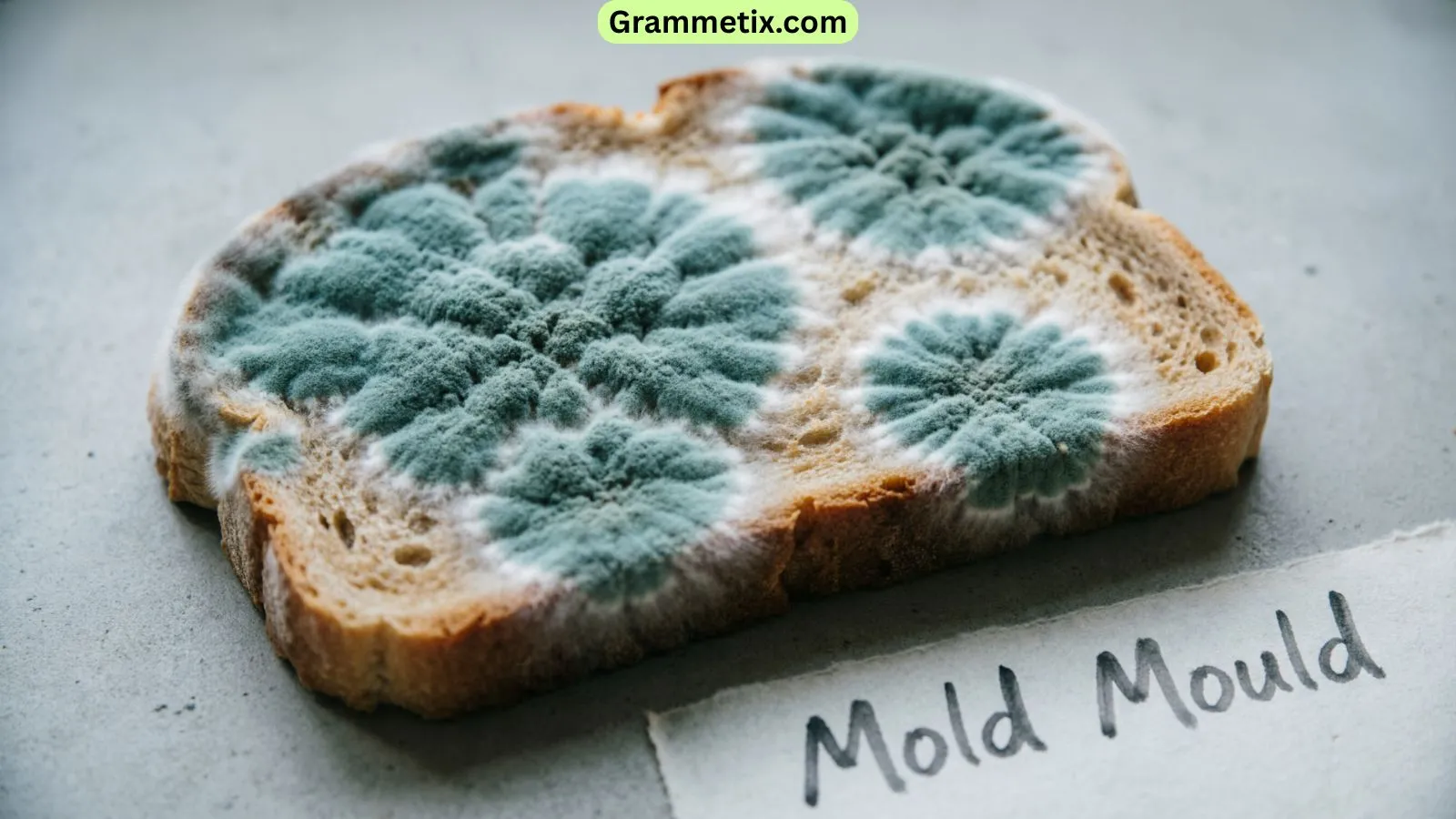
Have you ever paused while writing and wondered: is it “mould” or “mold”? You’re not alone. This is one of the most common spelling confusions in English.
People search for this keyword because both versions look correct and actually, they are! The confusion comes from differences between British and American English.
In this guide, you’ll get a quick answer, learn the history behind the spellings, and understand which one to use based on your audience.
By the end, you’ll never second-guess yourself again.
Mould or Mold – Quick Answer
Both mould and mold are correct spellings. The difference depends on the type of English you are using:
- Mould → Used in British English
- Mold → Used in American English
Examples:
- British: The bread has mould on it.
- American: The bread has mold on it.
Both sentences mean the same thing—only the spelling changes.
The Origin of Mould or Mold
The word comes from old languages like Old French (moule) and Latin (modulus). Over time, English split into different versions:
- In Britain, the spelling stayed closer to older forms → mould
- In America, spelling was simplified → mold
This simplification was influenced by language reformers like Noah Webster, who wanted English spelling to be easier.
British English vs American English Spelling
Here’s how the spelling differs clearly:
| Context | British English | American English |
|---|---|---|
| Fungus on food | mould | mold |
| Shaping material | mould | mold |
| Verb (to shape) | mould | mold |
Key Rule:
- British English often keeps extra letters (like ou in mould)
- American English removes them (like o in mold)
Which Spelling Should You Use?
Choosing the right spelling depends on your audience:
- Writing for the US? → Use mold
- Writing for the UK or Commonwealth (UK, Canada, Australia)? → Use mould
- Writing for a global audience?
→ Pick one style and stay consistent
👉 Tip: If you’re unsure, follow the spelling style of your platform or client.
Common Mistakes with Mould or Mold
Here are frequent errors people make:
Mixing both spellings in one article ❌
Stick to one version throughout ✔️
Using “mould” in American content ❌
Use “mold” for US readers ✔️
Thinking one is wrong ❌
Both are correct—just region-specific ✔️
Confusing meaning with spelling ❌
Meaning stays the same in both forms ✔️
Mould or Mold in Everyday Examples
Emails:
- British: Please remove the mould from the wall.
- American: Please remove the mold from the wall.
News:
- UK News: Homes affected by black mould
- US News: Homes affected by black mold
Social Media:
- My bread grew mold overnight 😬
- My bread grew mould overnight 😬
Formal Writing:
- The experiment studied fungal mould/mold growth
Mould or Mold – Google Trends & Usage Data
- Mold is more popular in the United States
- Mould is widely used in the UK, Australia, and other Commonwealth countries
- Globally, mold often dominates due to American media influence
Usage Insight:
- Scientific and international content sometimes prefers mold
- Local publications stick to regional spelling rules
Comparison Table: Mould vs Mold
| Feature | Mould | Mold |
|---|---|---|
| Region | UK, Australia | USA |
| Spelling Style | Traditional | Simplified |
| Meaning | Fungus / Shape | Fungus / Shape |
| Usage Preference | British English | American English |
FAQs
1. Is mould or mold correct?
Both are correct. Use mould for British English and mold for American English.
2. Do mould and mold mean the same thing?
Yes, they have the exact same meaning.
3. Why does British English use “mould”?
It keeps the older, traditional spelling.
4. Why does American English use “mold”?
It follows simplified spelling rules introduced in the US.
5. Which spelling is more common worldwide?
Mold is slightly more common due to US influence.
6. Can I use both in one article?
No, it’s better to stay consistent with one version.
7. Is one more formal than the other?
No, both are equally formal in their respective regions.
Conclusion
The difference between mould or mold is simple once you understand it. Both spellings are correct, they just belong to different versions of English.
If you’re writing for an American audience, go with mold. For British or Commonwealth readers, use mould. The key is consistency and audience awareness.
By following this rule, your writing will look more professional and clear. Next time you face this confusion, you’ll know exactly what to do, no second guessing needed.