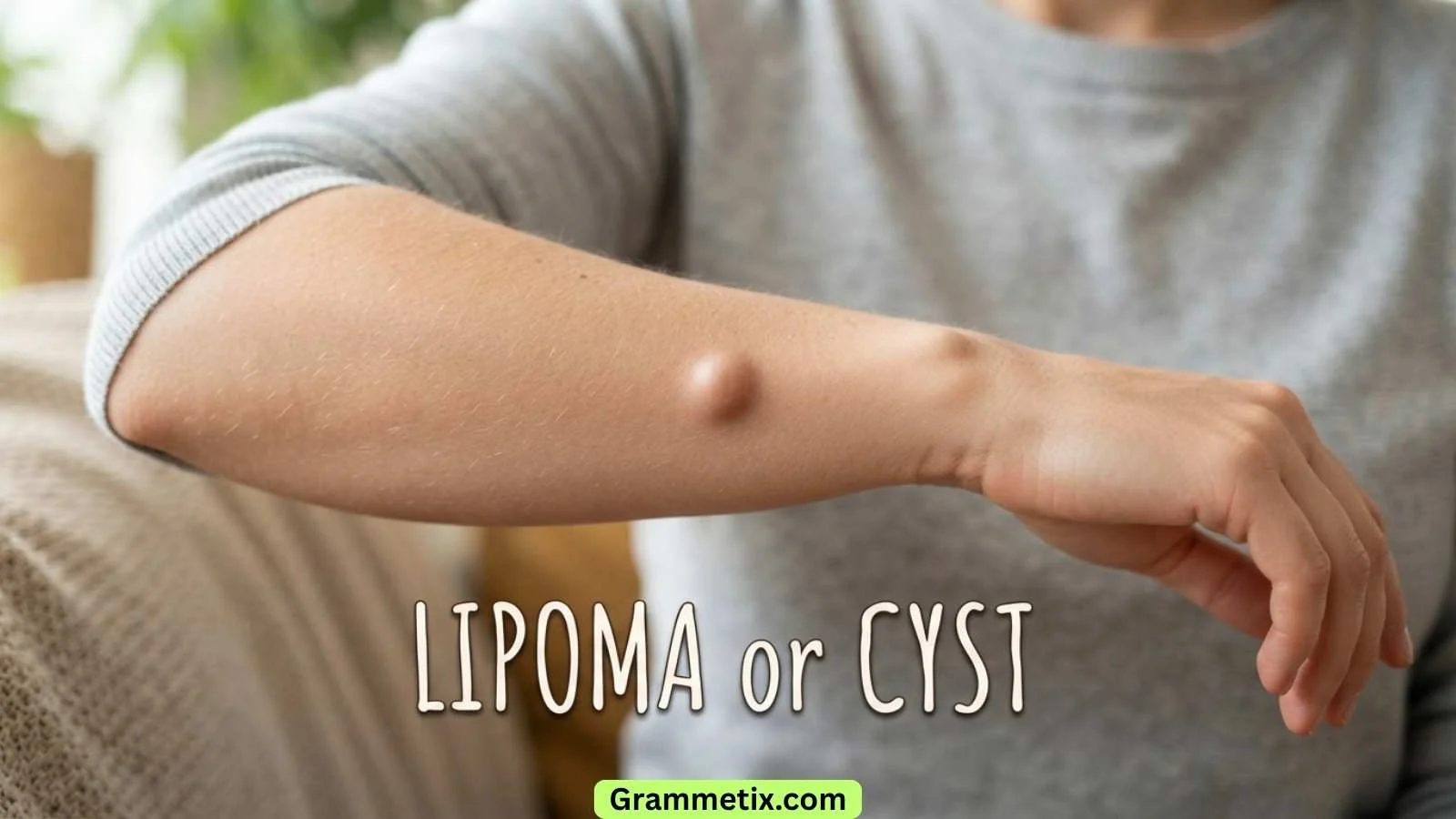
Lipoma or cyst is a common search because both can appear as soft lumps under the skin.
Many people worry when they notice a new bump. They want to know if it is harmless or needs medical care.
At first, a lipoma and a cyst can look alike. Both may grow slowly and feel like a small lump. This makes it easy to confuse them. However, they are different conditions with different causes and treatments.
In this guide, you will learn what a lipoma is, what a cyst is, how they differ, and when you should see a doctor. Everything is explained in simple language so anyone can understand.
Lipoma or Cyst – Quick Answer
A lipoma is a soft lump made of fat that grows under the skin. A cyst is a small sac filled with fluid, pus, or other material. Lipomas are usually soft and move easily, while cysts are often firmer and may become painful if infected. A doctor can examine the lump to tell the difference.
What Is a Lipoma?
A lipoma is a slow-growing lump of fatty tissue. It develops just below the skin. Most lipomas are harmless and are not cancer.
Lipomas are one of the most common non-cancerous soft tissue growths. They can appear almost anywhere on the body where fat is present.
Common features of a lipoma
- Soft and rubbery to touch
- Moves easily under the skin
- Usually painless
- Grows slowly over months or years
- Often feels round or oval
- Usually smaller than 2 inches (5 cm), but some grow larger
Where do lipomas usually appear?
Lipomas often develop on the:
- Neck
- Shoulders
- Back
- Upper arms
- Chest
- Thighs
Some people have only one lipoma. Others may develop several during their lifetime.
What causes a lipoma?
Doctors do not know the exact cause. However, several factors may increase the chance of getting one.
These include:
- Family history
- Middle age
- Rare genetic conditions
- Minor injuries in some cases
Most lipomas do not cause health problems. They usually stay small and harmless.
Do lipomas need treatment?
Not always.
Many lipomas never need treatment. A doctor may suggest removing one if it:
- Becomes painful
- Keeps growing
- Presses on nearby nerves
- Causes cosmetic concerns
- Makes movement uncomfortable
Removal is usually a simple outpatient procedure.
What Is a Cyst?
A cyst is a closed sac under the skin. It can contain fluid, pus, air, dead skin cells, or a thick material called keratin.
Unlike a lipoma, a cyst is not made of fat.
Many types of cysts exist. The most common skin cyst is an epidermoid cyst.
Common features of a cyst
- Round lump under the skin
- May feel firm or smooth
- Can have a small black dot in the center
- May become red or swollen
- Can be painful if infected
- Sometimes leaks thick fluid with a strong smell
Where do cysts usually appear?
Cysts often develop on the:
- Face
- Neck
- Back
- Chest
- Scalp
- Groin
They may appear almost anywhere on the body.
What causes a cyst?
Several things can lead to cyst formation.
Common causes include:
- Blocked oil glands
- Damaged hair follicles
- Skin injuries
- Infections
- Trapped skin cells
Unlike lipomas, cysts are more likely to become inflamed or infected.
Do cysts need treatment?
Many small cysts disappear on their own.
A doctor may recommend treatment if the cyst:
- Hurts
- Becomes infected
- Drains pus
- Grows quickly
- Keeps returning
- Causes discomfort
Treatment may include draining the cyst or removing it completely.
Key Differences Between Lipoma and Cyst
Although both look like lumps under the skin, they have important differences.
| Feature | Lipoma | Cyst |
|---|---|---|
| Made of | Fat cells | Fluid, pus, keratin, or other material |
| Feel | Soft and rubbery | Firm or smooth |
| Movement | Moves easily under the skin | Moves less easily |
| Pain | Usually painless | Can become painful if infected |
| Growth | Slow | Slow or sometimes faster after infection |
| Skin color | Usually normal | May become red or swollen |
| Infection | Rare | Fairly common |
| Treatment | Often not needed | May need drainage or removal |
Quick ways to tell them apart
- A lipoma feels soft like a small cushion.
- A cyst often feels firmer.
- A lipoma moves freely when touched.
- A cyst may have a tiny opening on the skin.
- A cyst is more likely to become red and painful.
- A lipoma usually stays painless for years.
Can You Tell the Difference Yourself?
Sometimes, but not always.
Small lipomas and cysts can look very similar. Only a healthcare professional can make a reliable diagnosis through a physical examination. In some cases, they may use an ultrasound or remove a small sample if the lump has unusual features.
Key takeaway: A soft, painless, movable lump is more likely to be a lipoma. A firm lump that becomes red, swollen, or drains fluid is more likely to be a cyst. However, any new or changing lump should be checked by a doctor to confirm the diagnosis.
Lipoma or Cyst Symptoms, Causes, Diagnosis, and Seriousness
Lipoma or Cyst: Symptoms
A lipoma and a cyst can both appear as lumps under the skin. However, their symptoms are often different. Knowing these signs can help you understand what you may have. Still, only a doctor can give a proper diagnosis.
Symptoms of a Lipoma
A lipoma usually grows very slowly. It often stays the same for many years.
Common symptoms include:
- Soft and rubbery lump
- Moves easily when touched
- Usually painless
- Round or oval shape
- Normal skin color
- Slow growth over months or years
Some lipomas may become painful. This can happen if they press on nearby nerves or grow larger than usual.
Symptoms of a Cyst
A cyst can feel quite different. Many cysts are firm and sit closer to the skin.
Common symptoms include:
- Firm or smooth lump
- May have a small black dot in the center
- Can become red and swollen
- May feel warm if infected
- Can be painful or tender
- Sometimes leaks thick, yellow, or white material
If bacteria enter the cyst, it may fill with pus. This often causes pain and swelling.
Symptom Comparison
| Symptom | Lipoma | Cyst |
|---|---|---|
| Texture | Soft | Firm or smooth |
| Pain | Usually no | Possible, especially if infected |
| Movement | Moves easily | Less movable |
| Redness | Rare | Common if inflamed |
| Drainage | No | May leak fluid or pus |
| Growth speed | Slow | Slow, but may enlarge quickly if infected |
Which Lump Hurts More?
A healthy lipoma rarely hurts.
A cyst is much more likely to become painful because it can become infected or inflamed.
Lipoma or Cyst: Causes
Although both create lumps, they develop for different reasons.
What Causes a Lipoma?
Doctors do not know the exact cause of lipomas.
Several factors may increase the risk.
These include:
- Family history
- Being between 40 and 60 years old
- Certain inherited conditions
- Rarely, minor injuries
A lipoma develops when fat cells grow more than they should. This growth is usually harmless.
What Causes a Cyst?
Cysts often develop because something blocks the skin or hair follicles.
Common causes include:
- Blocked oil glands
- Trapped skin cells
- Damaged hair follicles
- Skin injuries
- Bacterial infections
- Long-term skin irritation
Unlike lipomas, cysts are more likely to become infected.
Risk Factors
Some people have a higher chance of developing these lumps.
Lipoma risk factors
- Family members with lipomas
- Middle-aged adults
- Certain genetic disorders
Cyst risk factors
- Acne-prone skin
- Oily skin
- Skin injuries
- Poor drainage of hair follicles
- Previous cysts
Neither condition is usually caused by poor hygiene.
How Doctors Tell the Difference
A doctor can often tell the difference during a physical examination.
They will ask questions about:
- When the lump appeared
- Whether it hurts
- If it has grown quickly
- Any drainage or redness
- Your medical history
Next, the doctor will gently examine the lump.
They check:
- Size
- Shape
- Texture
- Movement
- Tenderness
Imaging Tests
Sometimes the diagnosis is not obvious.
The doctor may order imaging tests.
These include:
- Ultrasound: Shows whether the lump contains fat or fluid.
- MRI scan: Gives detailed images of larger or deeper lumps.
- CT scan: Used less often but may help in complex cases.
Biopsy
If the lump has unusual features, the doctor may remove a small sample.
This is called a biopsy.
The tissue is examined under a microscope.
A biopsy helps rule out rare cancers or other conditions.
Warning Signs That Need Medical Attention
See a doctor promptly if a lump:
- Grows very quickly
- Is larger than about 5 cm (2 inches)
- Causes severe pain
- Feels hard and fixed
- Bleeds or drains repeatedly
- Changes color
- Comes back after treatment
- Causes numbness or weakness
These signs do not always mean cancer. However, they should be checked without delay.
Lipoma or Cyst: Which Is More Serious?
Most lipomas and cysts are harmless.
However, one may need treatment sooner than the other.
Is a Lipoma Serious?
A lipoma is usually not serious.
Most people live with them for years without any problems.
Doctors often recommend simply watching the lump unless it:
- Causes pain
- Continues growing
- Affects movement
- Becomes bothersome
Cancer developing from a lipoma is extremely rare.
Is a Cyst Serious?
Most cysts are also harmless.
However, they have a greater chance of causing problems.
A cyst may:
- Become infected
- Fill with pus
- Burst under the skin
- Return after draining
- Become painful
An infected cyst often needs medical treatment.
Which One Needs Treatment More Often?
In general:
- Lipomas often do not need treatment unless they cause symptoms.
- Cysts are more likely to need treatment because they can become infected or keep coming back.
Quick Comparison
| Question | Lipoma | Cyst |
|---|---|---|
| Usually harmless? | Yes | Yes |
| Often painful? | No | Sometimes |
| Can become infected? | Very rarely | Yes |
| Usually needs surgery? | Only if bothersome | Sometimes |
| Should a doctor examine it? | Yes, if new or changing | Yes, especially if painful or infected |
Key takeaway: Both lipomas and cysts are usually non-cancerous. A lipoma is generally less troublesome because it rarely becomes infected. A cyst is more likely to become painful, swollen, or infected, so it may require treatment sooner. Any new, fast-growing, or unusual lump should always be examined by a healthcare professional.
Treatment, Home Care, Prevention, and Common Myths
Treatment Options for Lipoma and Cyst
The best treatment depends on the type of lump. Some lipomas and cysts never need treatment. Others should be treated by a healthcare professional.
Lipoma Treatment
Most lipomas do not require treatment. If the lump is small and painless, your doctor may simply monitor it.
Treatment may be recommended if a lipoma:
- Keeps growing
- Causes pain
- Presses on nerves
- Limits movement
- Bothers you because of its appearance
Surgical Removal
Surgery is the most common treatment for a lipoma.
During the procedure:
- The area is numbed with local anesthesia.
- The doctor makes a small cut.
- The lipoma is removed.
- The wound is closed with stitches if needed.
Most people go home the same day.
Liposuction
Some larger lipomas may be removed using liposuction. A thin tube removes the fatty tissue through a small opening.
This option may leave a smaller scar. However, some lipomas can return if all fatty tissue is not removed.
Cyst Treatment
Many small cysts disappear without treatment.
However, treatment may be needed if the cyst:
- Becomes infected
- Causes pain
- Keeps growing
- Returns after draining
- Affects daily activities
Drainage
A doctor may drain the fluid from the cyst.
This helps reduce pain and swelling.
Keep in mind that draining alone may not remove the entire cyst wall. Because of this, the cyst can come back.
Surgical Removal
Removing the whole cyst is often the best long-term treatment.
The doctor removes both the cyst and its lining. This lowers the chance of the cyst returning.
Antibiotics
Antibiotics may be prescribed if the cyst becomes infected.
They help treat the infection but usually do not remove the cyst itself.
Can You Treat Them at Home?
Many people wonder if they can remove a lipoma or cyst themselves.
The answer is simple.
Do not try to cut, squeeze, or pop a lump at home.
Doing so can cause:
- Infection
- Bleeding
- Scarring
- More pain
- Delayed healing
Caring for a Lipoma at Home
A lipoma usually needs no home treatment.
You can:
- Watch for changes in size.
- Avoid pressing on it often.
- Wear loose clothing if it rubs against the lump.
Caring for a Cyst at Home
If a cyst is not infected, you can try simple care.
A warm compress may help.
Place a warm, clean cloth over the cyst for 10–15 minutes. Repeat this several times each day.
This may help the cyst drain naturally.
What You Should Never Do
Never:
- Pop a cyst with a needle
- Cut open a lump
- Squeeze it forcefully
- Apply harsh chemicals
- Ignore signs of infection
These actions can make the problem worse.
When Should You See a Doctor?
Many lumps are harmless. Still, every new lump should be checked if you are unsure what it is.
You should see a doctor if the lump:
- Grows quickly
- Causes pain
- Becomes red or warm
- Leaks pus or blood
- Feels very hard
- Does not move under the skin
- Returns after treatment
- Interferes with daily activities
Seek Medical Care Right Away If
Get prompt medical attention if you notice:
- A fever with an infected lump
- Rapid swelling
- Severe pain
- Red streaks spreading from the lump
- Trouble moving the nearby body part
These signs may mean you have an infection or another condition that needs treatment.
How Doctors Help
Your doctor may:
- Examine the lump
- Order an ultrasound if needed
- Drain an infected cyst
- Recommend surgery
- Arrange a biopsy if the lump has unusual features
Early evaluation can provide peace of mind and help you receive the right treatment if necessary.
How to Prevent Lipomas and Cysts
There is no guaranteed way to prevent lipomas.
They often develop because of genetics.
However, you can reduce your risk of some skin cysts by taking good care of your skin.
Tips That May Help
- Wash your skin gently every day.
- Treat acne early.
- Avoid picking at pimples.
- Protect your skin from injuries.
- Keep cuts clean while they heal.
- Wear clean clothing during exercise.
These habits support healthy skin, but they cannot prevent every cyst.
Can Diet Prevent Them?
There is no strong evidence that a special diet prevents lipomas or cysts.
Eating a balanced diet is good for your overall health, but it has not been proven to stop these lumps from forming.
Common Myths
Many people believe things about lipomas and cysts that are not true.
Let’s clear up some common myths.
1: Every Lump Is Cancer
Fact: Most lipomas and skin cysts are non-cancerous.
Even so, any new or changing lump should be checked by a healthcare professional.
2: Lipomas Always Need Surgery
Fact: Many lipomas never need treatment.
Doctors often recommend removing them only if they cause pain, grow larger, or bother you.
3: You Can Safely Pop a Cyst at Home
Fact: Popping a cyst yourself can cause infection, bleeding, and scarring.
A healthcare professional can remove or drain it safely if needed.
4: Lipomas Turn Into Cancer
Fact: Ordinary lipomas almost never become cancer.
If a lump changes quickly or has unusual features, your doctor may recommend further testing to confirm the diagnosis.
5: Cysts Are Caused by Poor Hygiene
Fact: Most cysts develop because of blocked glands, trapped skin cells, or damaged hair follicles.
Poor hygiene is not the usual cause.
Key Takeaways
- Lipomas are soft lumps made of fat.
- Cysts are sacs filled with fluid or other material.
- Most are harmless.
- Never try to remove a lump yourself.
- See a doctor if a lump grows, hurts, becomes infected, or changes quickly.
- Proper diagnosis is the safest way to know what type of lump you have.
FAQs
1. How can I tell if I have a lipoma or a cyst?
A lipoma usually feels soft, moves easily under the skin, and is not painful. A cyst is often firmer and may become red, swollen, or painful if infected. A healthcare professional can examine the lump and, if needed, use an ultrasound or other tests to confirm the diagnosis.
2. Is a lipoma more dangerous than a cyst?
No. Most lipomas and skin cysts are harmless. However, cysts are more likely to become infected or inflamed, while lipomas usually remain painless. Any lump that grows quickly, becomes painful, or changes shape should be checked by a doctor.
3. Can a lipoma turn into cancer?
A typical lipoma is a benign (non-cancerous) growth of fat cells and almost never turns into cancer. If a lump grows rapidly, feels hard, or has unusual features, your doctor may recommend further tests to rule out other conditions.
4. Should I squeeze or pop a cyst?
No. Squeezing or popping a cyst can lead to infection, bleeding, scarring, and delayed healing. If a cyst is painful, infected, or keeps returning, it is safest to have it treated by a healthcare professional.
5. Do lipomas and cysts go away on their own?
Lipomas usually stay the same size or grow slowly and rarely disappear without treatment. Some small cysts may drain or shrink on their own, but others remain or come back after draining.
6. When should I worry about a lump under my skin?
You should see a doctor if a lump grows quickly, becomes painful, feels hard, bleeds, drains pus, changes color, or causes numbness or weakness. These symptoms do not always mean something serious, but they should be evaluated promptly.
Conclusion
A lipoma and a cyst may look similar, but they are different conditions. A lipoma is a soft lump made of fat, while a cyst is a sac filled with fluid, keratin, or other material.
Lipomas are usually painless and rarely need treatment. Cysts are more likely to become swollen, infected, or uncomfortable.
The safest way to identify any lump is to have it examined by a healthcare professional. Avoid squeezing or cutting a lump at home. If it changes quickly, causes pain, or becomes infected, seek medical advice.
Understanding the differences between a lipoma and a cyst can help you make informed decisions and get the right care when needed.